Categories
Events Journal

An Evening of Flying at the Shuttleworth Collection 6th July 2013

Those people who know me well would tell you that I am not a big fan of aeroplanes.  In fact, the opposite is true.  I have never been in an aeroplane myself and I have no plans to ever change that.  Not only that, I don’t even like driving near airports in case a plane should suddenly fly low over the road and frighten the life out of me.
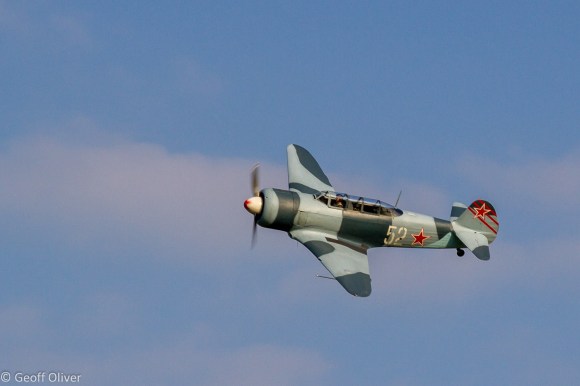
Shuttleworth-20130706-1

How is it then, that I recently decided to book a ticket to see my very first airshow?  Well, one reason is that this particular air display promised to feature some of the oldest planes still flying in the world.  The main reason, however, was because this event was to take place on a summer’s evening in July, and it was the prospect of photographing beautiful historic planes combined with the (hopefully) warm evening light that got my attention.

Shuttleworth-20130706-6
Shuttleworth Evening Flying, Bristol F2b Fighter 1918

So it was that I set out on the relatively short journey from my house to the Shuttleworth Collection at Old Warden, near Biggleswade.  This was another first for me as I had not been there before, although I did once go to the neighbouring Birds of Prey Centre with my good friend Barry.
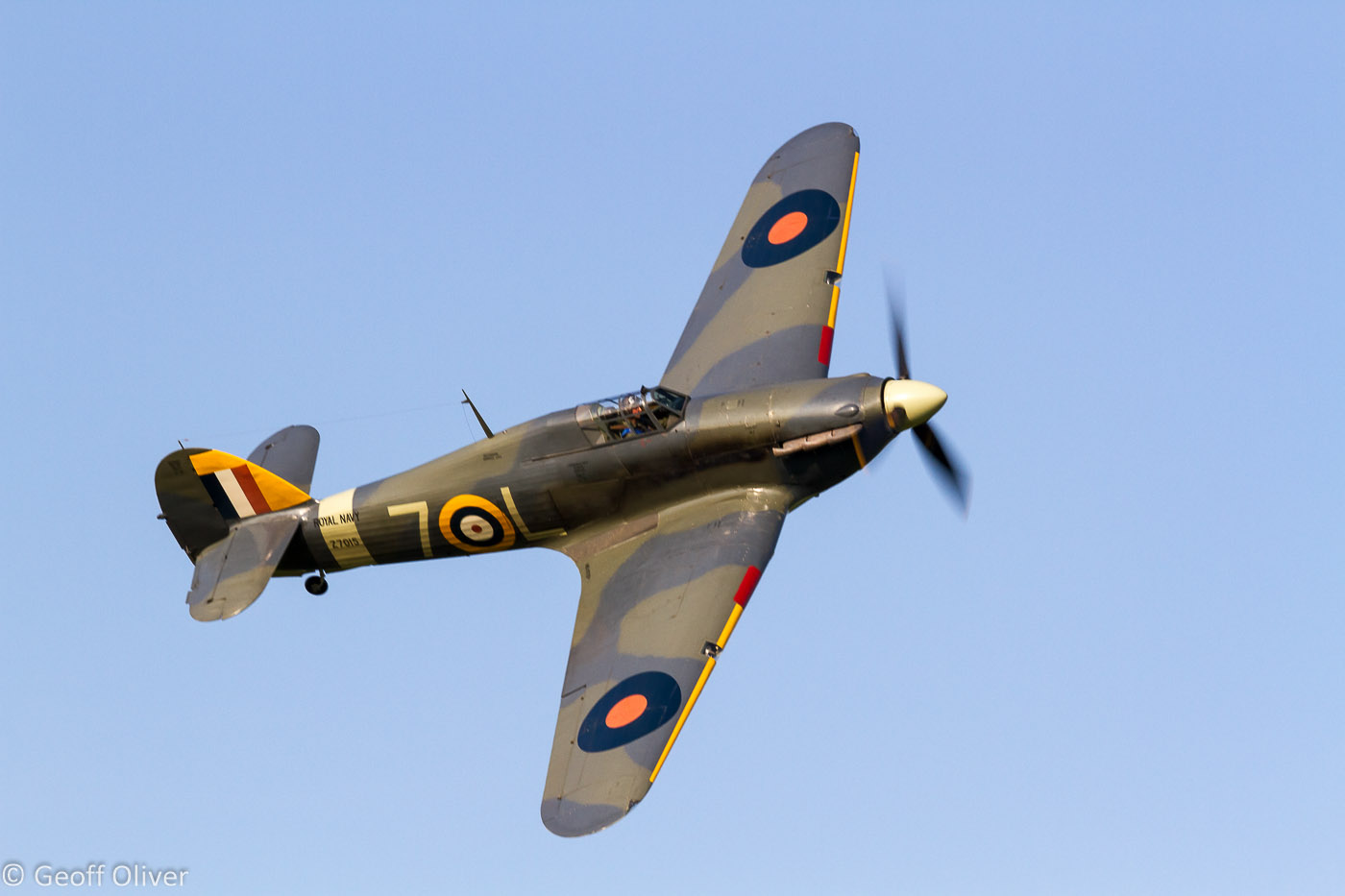
Shuttleworth-20130706-5
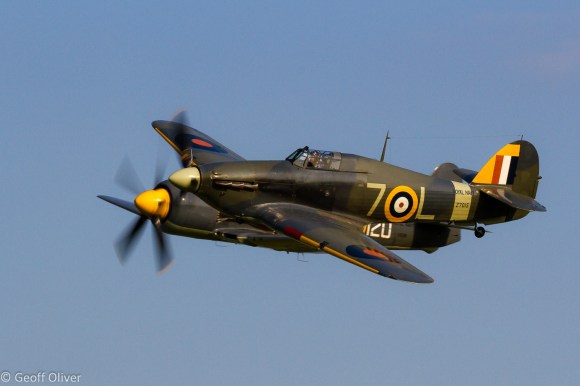
Shuttleworth Evening Flying, Hawker Sea Hurricane

Although it was my first air display, I have photographed propeller driven aircraft in the past at various historic re-enactments, usually associated with WWII.  Consequently, I was aware of the decision that all photographers taking this sort of subject have to take, namely how fast to set the shutter speed.

Shuttleworth-20130706-12
Shuttleworth Evening Flying, Deperdussin

On the one hand, a fast-moving plane demands a fast shutter speed in order to obtain a sharp image, especially when using a longer lens.  On the other hand, a fast shutter will “freeze” the propeller and make the plane resemble a model aircraft, hanging by a thread from the bedroom ceiling.  A slower speed is therefore needed in order to show the rotation of the propeller and give the picture a feeling of movement.
Shuttleworth-20130706-9
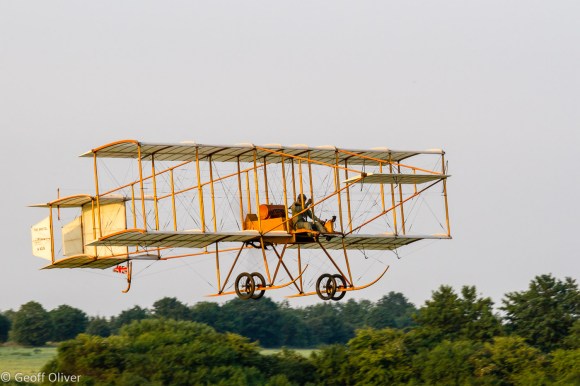
Shuttleworth Evening Flying July 2013 – Bristol Boxkite (Replica)

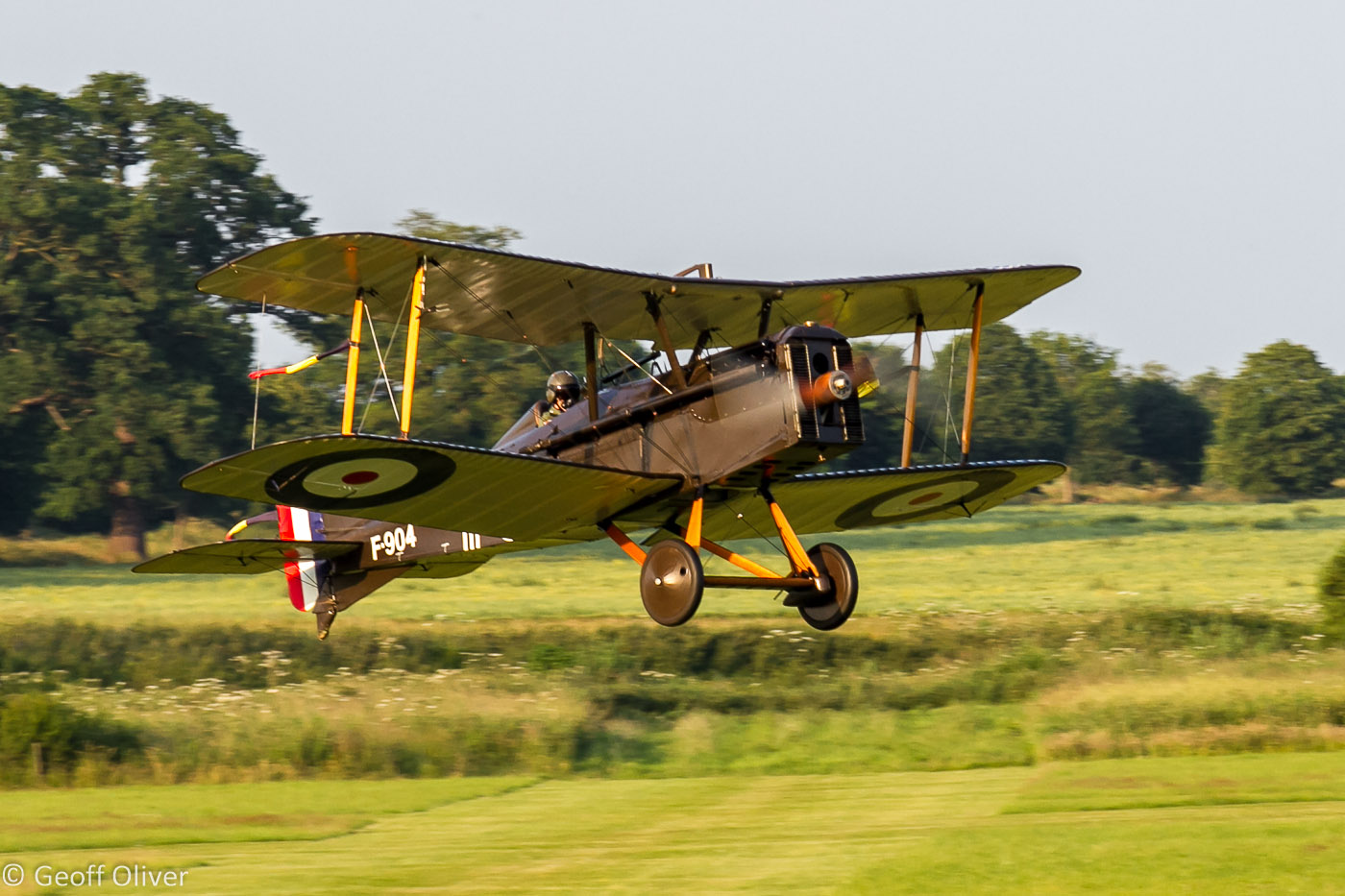
On the night, I tried a number of different shutter speeds including 1/200 second which gave good rotation of the prop but reduced my “keeper” rate somewhat due to camera shake (I was using an 80-200mm lens, mostly at the long end).  I also tried 1/320 second which showed less propeller movement but gave me many more keepers in terms of sharpness.  I also tried 1/250 second which was probably the best compromise, at least with this lens.  I dare say that a lens with built-in image stabilizer (IS) would have given me more sharp images at the slower speeds but I don’t have one of those as yet.
Shuttleworth-20130706-7
Shuttleworth Evening Flying July 2013 – SE5A Fighter

So how did it go?  Well, despite being a long way out of my comfort zone regarding my fear of planes, it was a brilliant event that I thoroughly enjoyed.  The perfect weather conditions certainly helped, it was a clear blue sky for most of the day and very warm indeed, even for July.  Add to that the beautiful planes, the great location and a well organised programme run by people who clearly have a love of all things flying and know how to run an event.
Shuttleworth-20130706-8
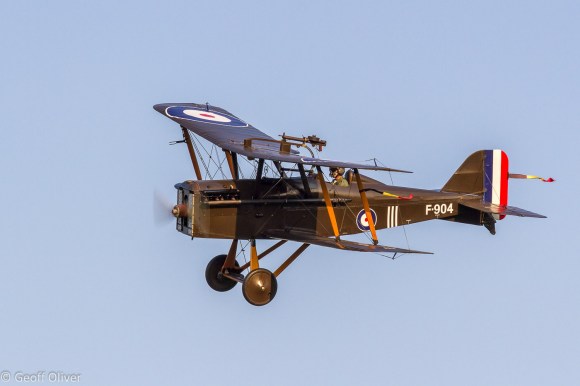
Shuttleworth Evening Flying July 2013 – SE5A Fighter

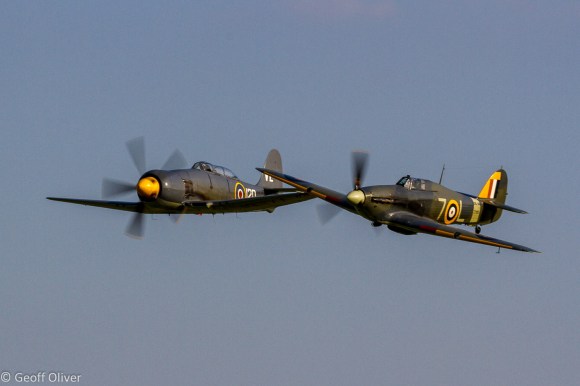
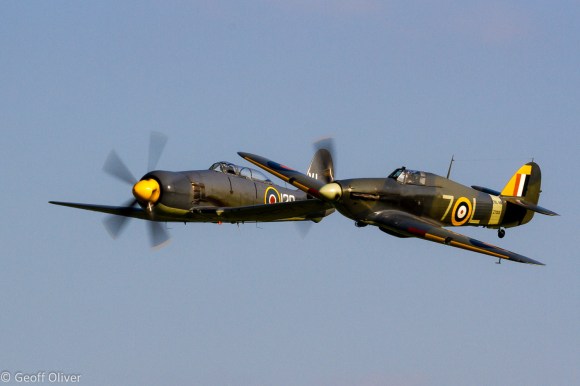
I must mention the arrival of the Hawker Sea Fury and Hawker Sea Hurricane.  They arrived side-by-side from the right-hand side of the airfield and flew across the viewing area literally wing tip to wing tip.  Luckily for me, my face was buried in the back of my camera with my finger welded to the shutter button as they flew by.  If I hadn’t been taking photos I’m sure I would have run for cover as they were frighteningly close, as you can see from the sequence of photos below.  I guess credit must go to the pilots for the outstanding skill they have in being able to fly so closely without colliding.
Shuttleworth-20130706-2
Shuttleworth Evening Flying July 2013 – Hawker Sea Fury and Sea Hurricane
Shuttleworth-20130706-3
Shuttleworth Evening Flying July 2013 – Hawker Sea Fury and Sea Hurricane
Shuttleworth-20130706-4
Shuttleworth Evening Flying July 2013 – Hawker Sea Fury and Sea Hurricane

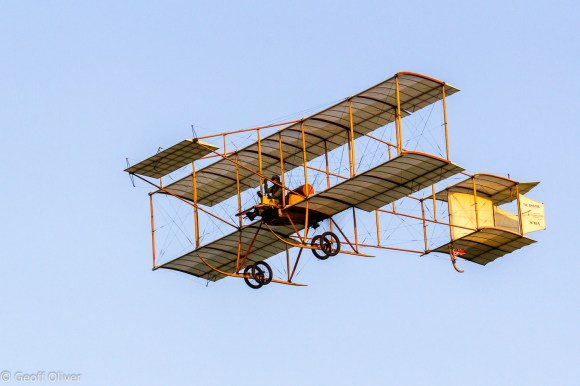
The light got better as the evening progressed, with the best light being saved for the WWI and Edwardian planes at the end.  If this Bristol Boxkite below looks familiar, you may have seen it staring in the hit movie “Those Magnificent Men In Their Flying Machines”.
Shuttleworth-20130706-11
Shuttleworth Evening Flying July 2013 – Bristol Boxkite (Replica)

Until next time, whatever your chosen subject, enjoy your photography!

Geoff

Categories
Events Journal Places Re-enactments

The Great Central Railway 1940s Wartime Weekend 2013

Here’s just a few of my favourite photos from the 1940s event last weekend at the Great Central Railway in Leicestershire.  As usual, I went with my good friend Barry on the Saturday, to be honest I was feeling a little tired after a long day at my sister-in-law’s wedding the day before.

As soon as we arrived we were immediately aware that it was going to be a busy day with lots of people having turned out to see the event.  I had decided the night before to take just my longer lens, a Canon 80-200mm F/2.8 L (a.k.a. The Magic Drainpipe), and leave my standard zoom (28-70mm) at home.  The longer zoom is perfect for head & shoulders portraits and I also had in mind the possibility of a fly-past at some point in the day but this turned out to be only on the Sunday.

The problem with taking only the longer lens, is that it requires a certain distance between the photographer and subject in order to get good framing and a little bit of variation in composition.

Now this is fine as long as there are not too many people and other photographers about but can be a bit tricky when there are lots of people around and lots of photographers with shorter lenses trying to get the same shot as me but from a closer range.  On the positive side, the longer lens can be used to “isolate” the subject from the surroundings and can also provide a more diffused background than with a standard zoom.

Geoff

Categories
Events Journal Places Re-enactments

It’s almost here! Great Central Railway 1940s Weekend 2013

One of my favourite events of the year is happening this weekend – 7th, 8th and 9th June 2013.  The 1940s event at the Great Central Railway in 2007 was one of the very first re-enactment events that I ever went to and this event is still one of the highlights of my photography calendar.

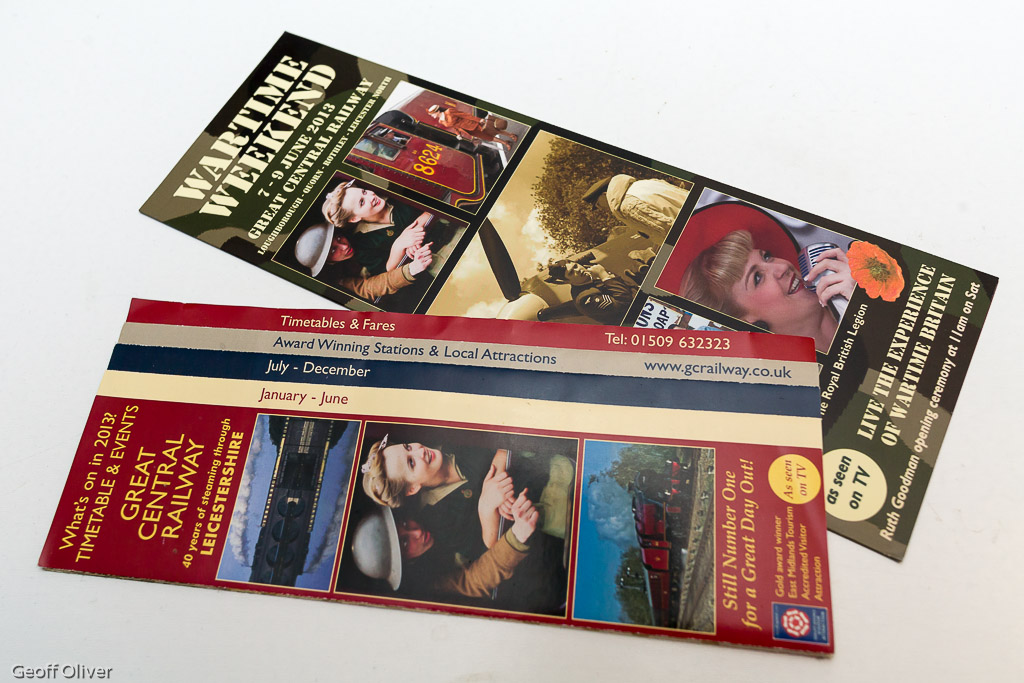
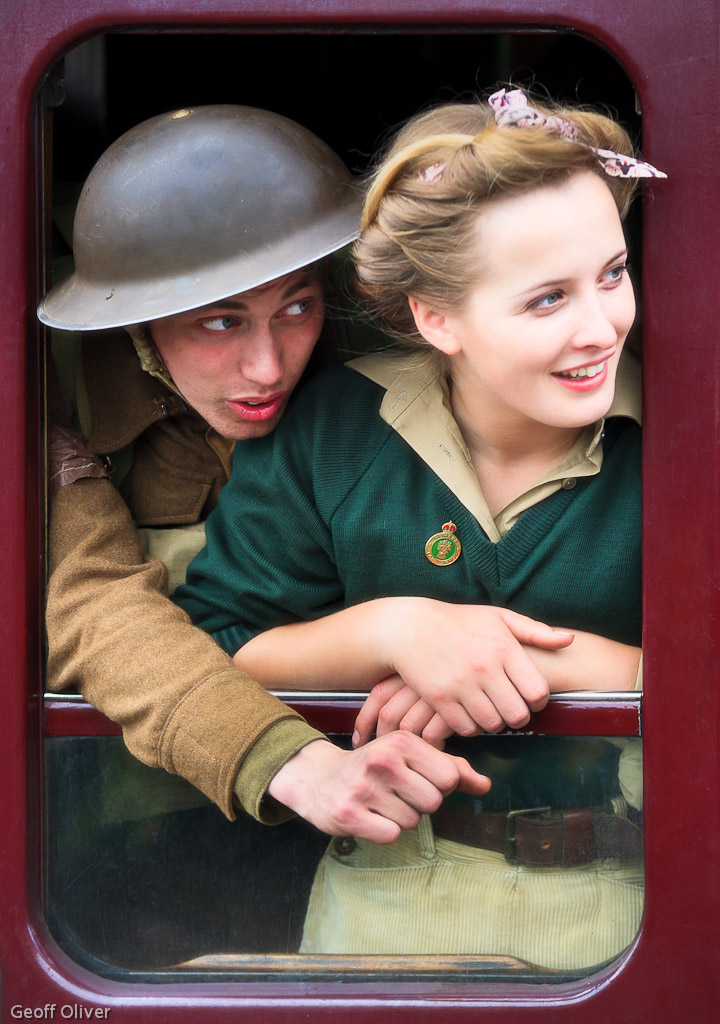
I shall hopefully be posting photos from this year’s event in due course but before I do that I just wanted to show you the 2013 Great Central Railway Timetable and also the Wartime Weekend Flyer, both of which feature one of my photos on the front cover, the young soldier and the land army girl looking out of the railway carriage window.

GO-Blog-20130606-1
Great Central Railway Timetable and Wartime Weekend Flyer 2013

I’m really pleased to see this photo taking pride of place on the front of these two brochures, I just hope I can take some photos of a similar quality over the coming weekend.  This shot was the best of a series of similar shots that I took just as the train was arriving at Rothley Station.

Here’s the original in case you missed it before:

"Young Lovers In Wartime" A young soldier and land army girl in 1940s costume
“Young Lovers In Wartime” A young soldier and land army girl in 1940s costume

***Update***Photos from the 2013 1940s event have been posted here

My photos from the GCR 1940s event in 2012 can still be seen here, and from the 2011 event here.

Photos from the first event I covered, back in 2007, can still be found here

Have a great weekend!

Geoff
Categories
Events Journal Places Re-enactments

Great Central Railway 1940s Weekend June 2012

Before I talk about my visit to the Great Central Railway 1940s weekend, I want to share some good news about two photos that I took at this event in 2010.  I recently entered these two image in the Great Central Railway Print section of the annual exhibition run by Leicester and Leicestershire Photographic Society.

This picture of an engine driver looking out of his cab was commended:

“Engine Driver British Railways” Great Central Railway 2010

This picture featuring a young soldier and a beautiful land army girl, which was a grab shot taken as a steam train was drawing into Rothley Station, was awarded second place in the same competition:

“Young Lovers In Wartime” Great Central Railway 2010

This year (2012) was the fifth time that my good friend Barry and I have photographed this event in the last 6 years.  Not only is it a great event for photographers, but it is a great day out with plenty to see and enjoy, good food and interesting people to meet and share experiences.

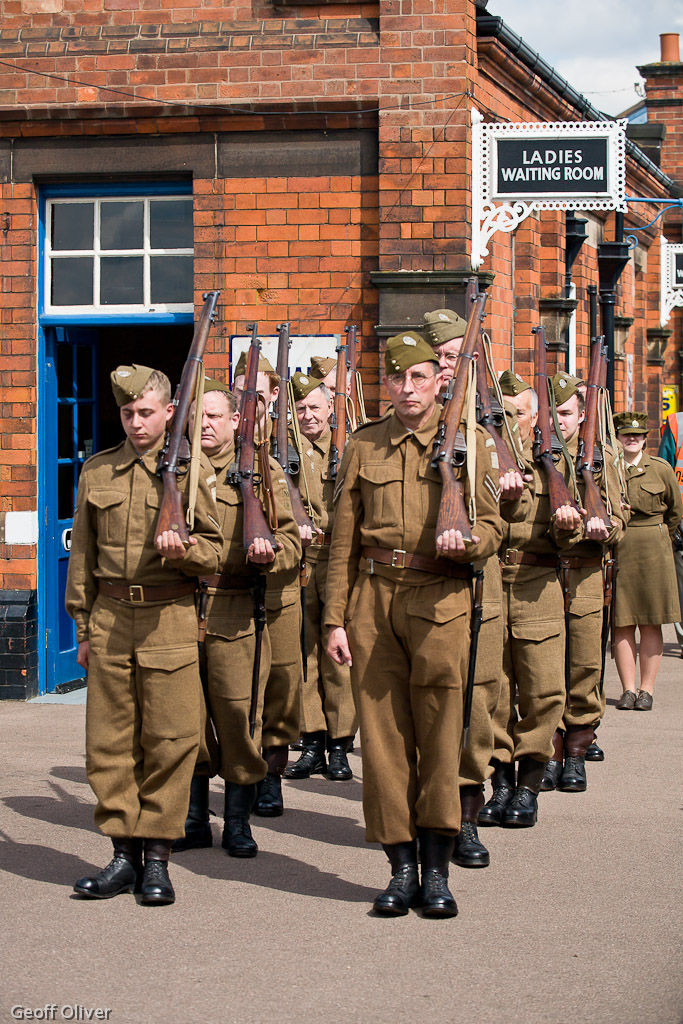
Members of the Pitsford Home Guard Living History Unit at Quorn and Woodhouse Station, Great Central Railway 2012

The weather turned out so much better than expected with the forecast for Sunday being wet and windy.  As it turned out, it was a beautiful day for re-enactors and visitors alike.

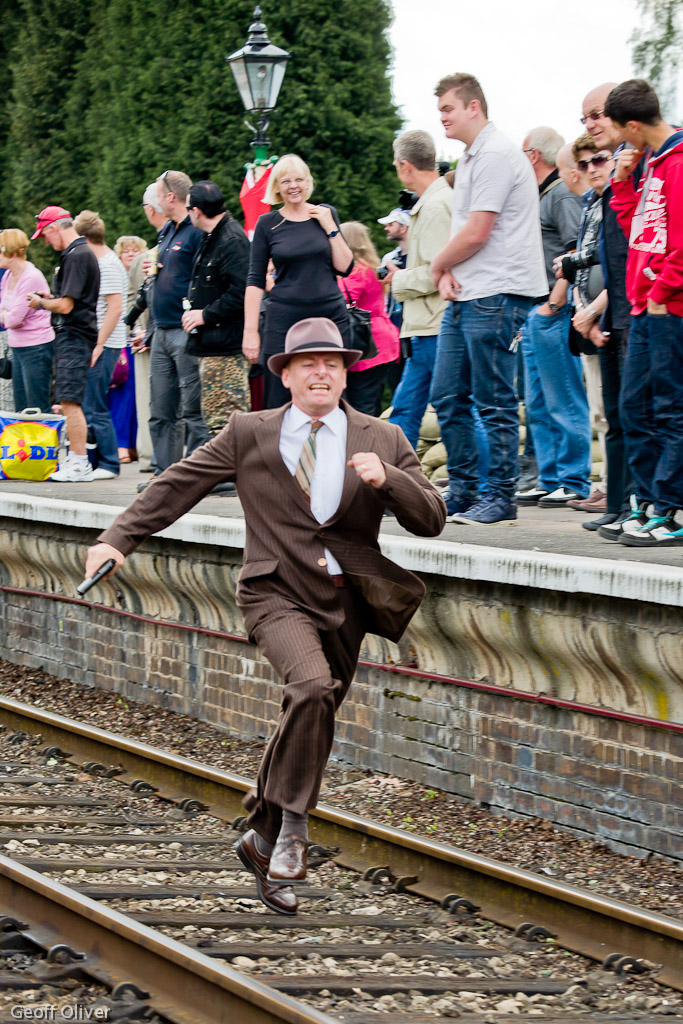
A British Spy attempts to escape by running along the railway track – Great Central Railway 2012

I don’t think there were quite as many period costume “characters” as there were last year but there was still plenty going on, certainly on the Sunday when we were there.  The Das Heer re-enactment group were on patrol at Rothley Station as in previous years.

A member of Das Heer Living History Re-enactment Group fires a warning shot – Great Central Railway 2012

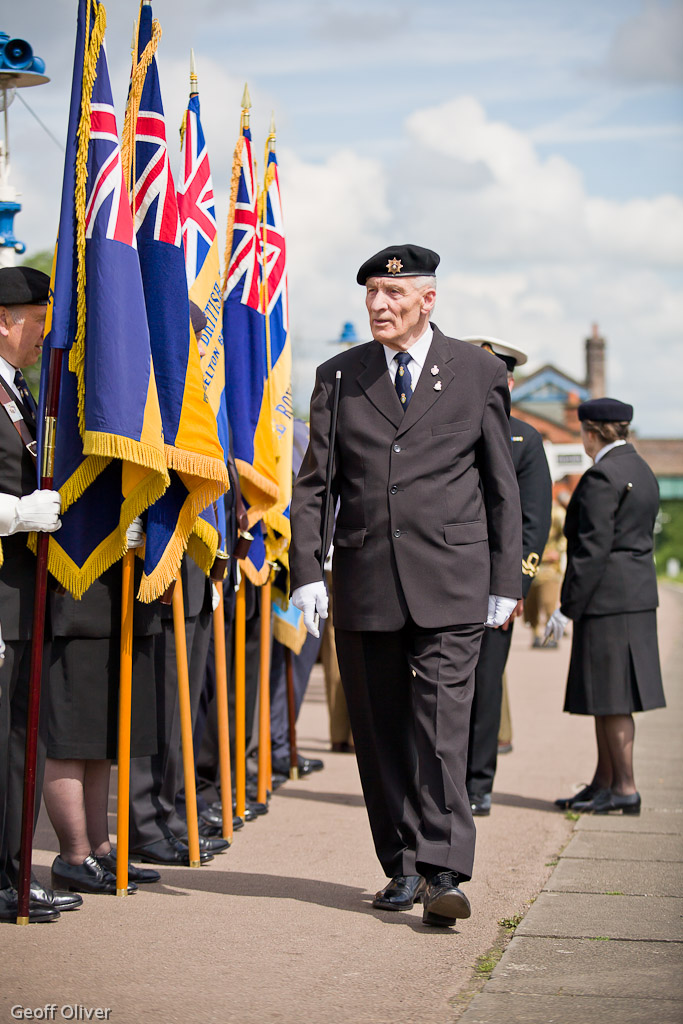
At Quorn and Loughborough Stations we encountered the Pitsford Home Guard Living History Group who carried out various exercises, parades and drills throughout the weekend.  There was also a rarade featuring members of the Royal British Legion and guest dignitaries including Montgomery among others.

Members of the Pitsford Home Guard Living History Unit on patrol at Loughborough Station – Great Central Railway 2012

This was my first re-enactment of the year following a long lay-off due to my back problem earlier in the year.  It was great to be out taking photos again and I hope to be able to cover more events through the remainder of the year now that my back is improving.

Standard Bearers of the Royal British Legion at Quorn and Woodhouse Station – Great Central Railway 2012

All the photos here were taken with my Canon EOS 5D (Classic) and EF 80-200mm F2.8L lens.  All photos were shot in RAW format and processed using Lightroom Version 3.6.  I’m still using Windows XP and so I am unable to upgrade to the latest version of Lightroom but to be honest it doesn’t concern me that much.

Loughborough Station in the 1940s – I love the shadow pattern being projected onto the carriages by the platform canopy – Great Central Railway 2012

As always, credit must go to the event organisers, especially everyone connected with the Great Central Railway, including all the volunteers.

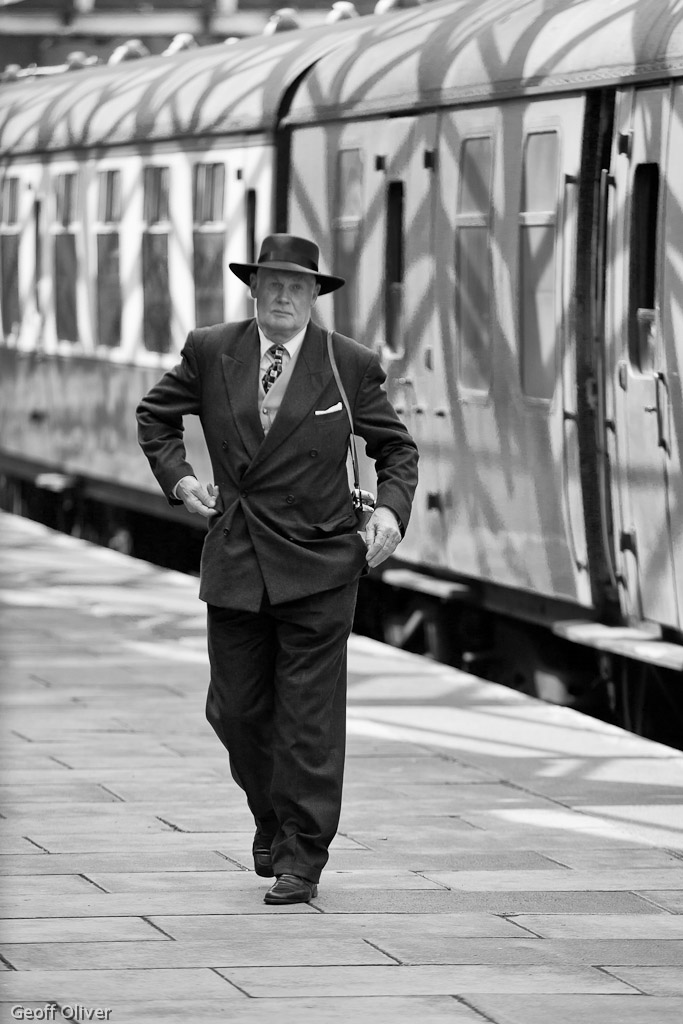
A Well-Dressed Professional 1940s Style – Great Central Railway 2012

Also thanks to all the living history groups and re-enactors, both military and civilian, who make these events such a great photo opportunity for the many enthusiast photographers like myself.

Geoff
Categories
Events Journal Places Running

Tough Mudder UK South-East/Midlands, Boughton House, Northamptonshire 12th May 2012

Finally, a new blog post – my first since January.  I’m going to start with a confession:  Up until the week before this event, I had never heard of Tough Mudder and didn’t know anything about this type of event.

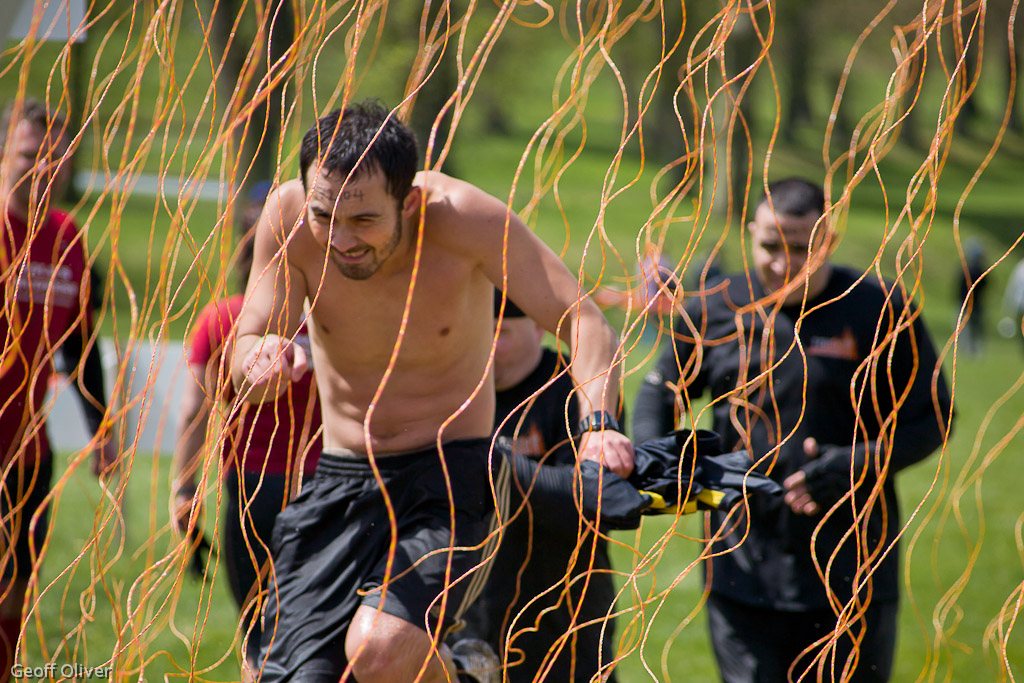
Tough Mudder – Leaving the Fire Walker – Boughton House, Northamptonshire, UK

It was my friend Janet who introduced me to the world that is Tough Mudder.  A friend and colleague of hers, Marianne, was taking part in the event and Janet wanted to go along to offer support and hopefully take some photos at the same time.  After doing some research on the event website, Janet thought that it would appeal to me as a photographic opportunity, and duly sent me the link.

Delight at seeing a familiar face – Tough Mudder “Fire Walker”, Boughton House, Northamptonshire, UK

As it happened, I also knew someone taking part in event, though I didn’t know it beforehand.  A colleague from work, Joe, spotted me on the approach to the Hay Bale Pyramid, one of the early obstacles.  I also managed to photograph him jumping a ditch a little later, but then all but missed him running through the Firewalker.  With hindsight, I would love to have caught him at the mud mile as I would have got a lot more photos at that location.  Maybe next time…

My work colleague Joe at the base of the Hay Bale Pyramid – Tough Mudder, Boughton House, Northamptonshire, UK

It turned out that this particular event, held at Boughton House, near Kettering in Northamptonshire was the very first Tough Mudder event to take place in the UK, following enormous success in the USA and other countries worldwide.  So what is Tough Mudder all about?  In essence, the event consists of a twelve-mile run across country with an obstacle to overcome roughly every half mile or so.

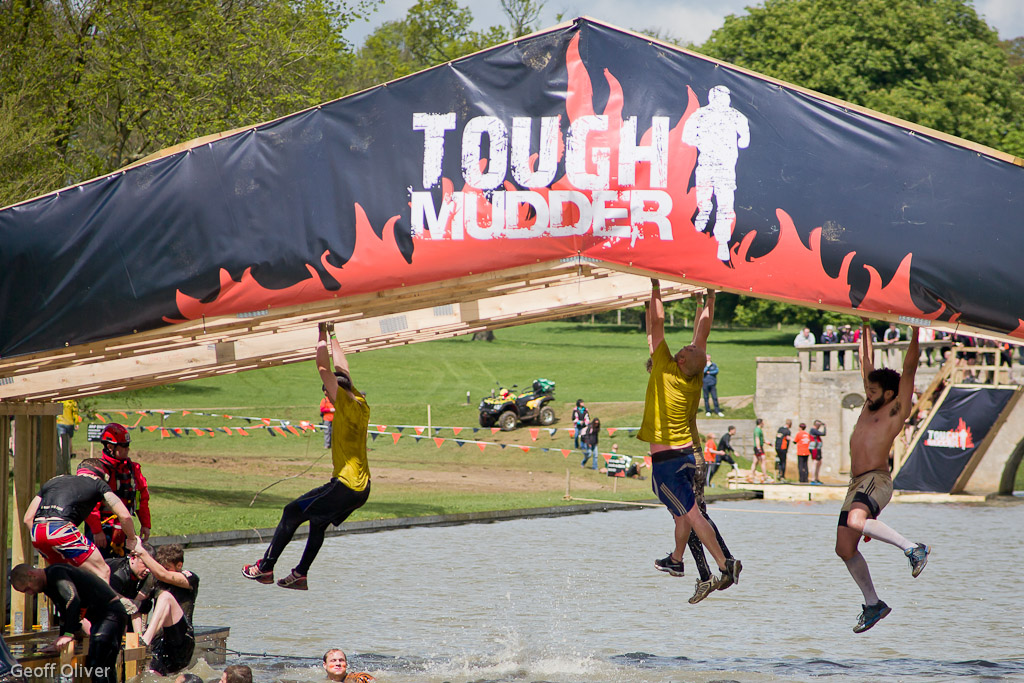
The Funkey Monkey – Tough Mudder, Boughton House

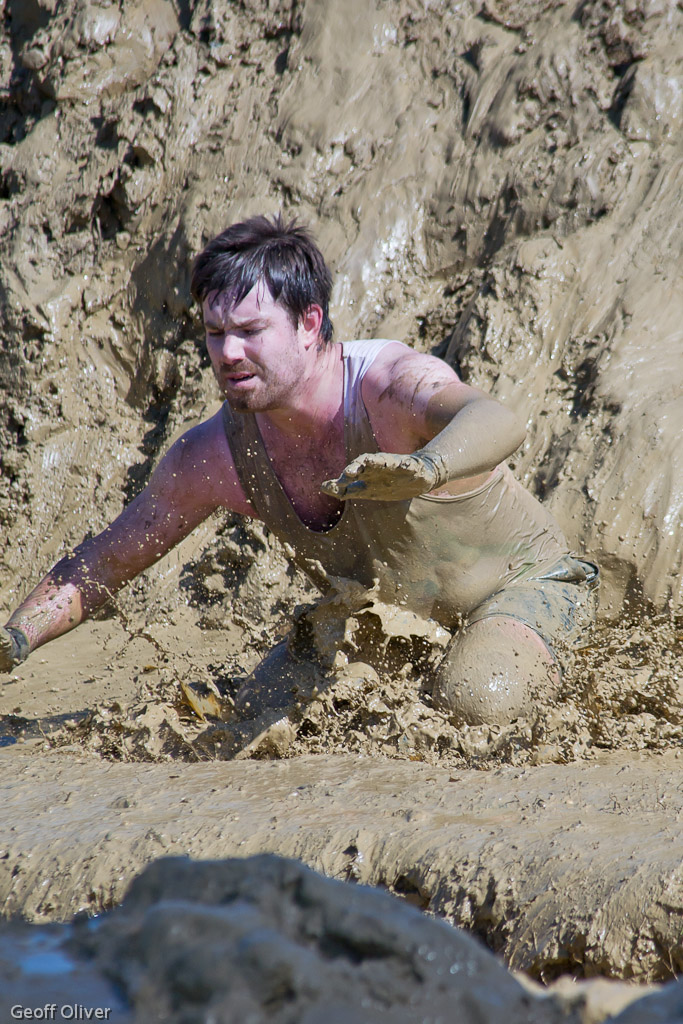
The obstacles varied in their difficulty and their level of sadism.  Some, like the Berlin Walls and Hay Bale Pyramid, provided a physical barrier to scale and overcome.  Others, like the Mud Mile and Log Bog Jog were designed to sap the energy out of the competitors and test their stamina…

The “Mud Mile” – Tough Mudder, Boughton House, Northamptonshire, UK

Other obstacles such the Funkey Monkey and Walk the Plank tested the physical capabilities of the runners in respect of their strength, balance and agility.  As for the Electro-Shock Therapy, well you can make your own mind up about that one…

Electro-Shock Therapy – 10,000 volts of Shock Treatment – Tough Mudder

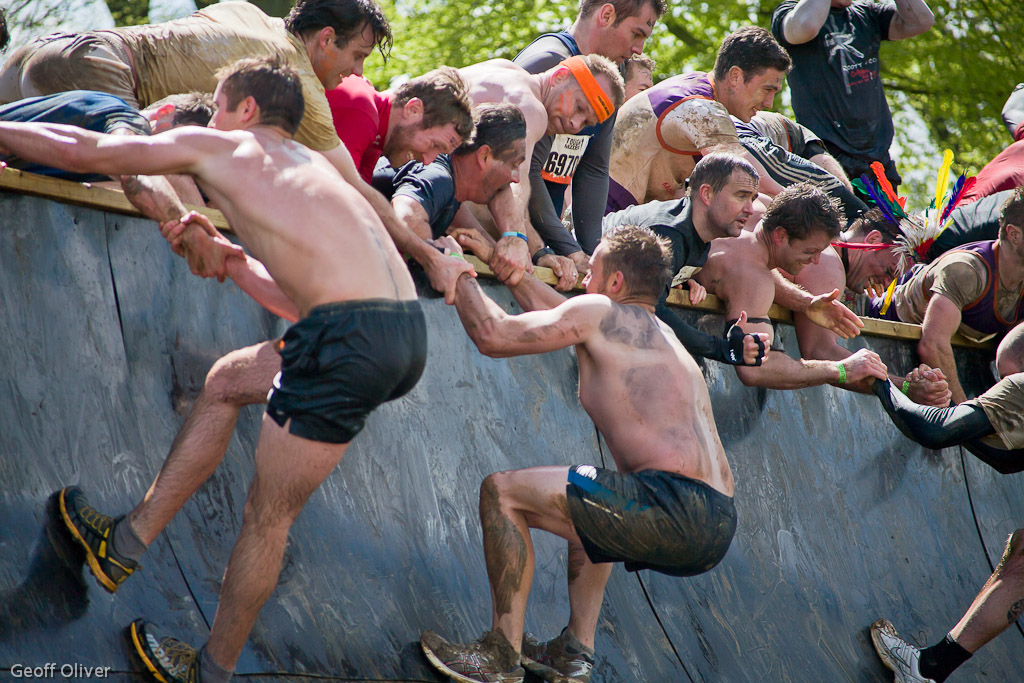
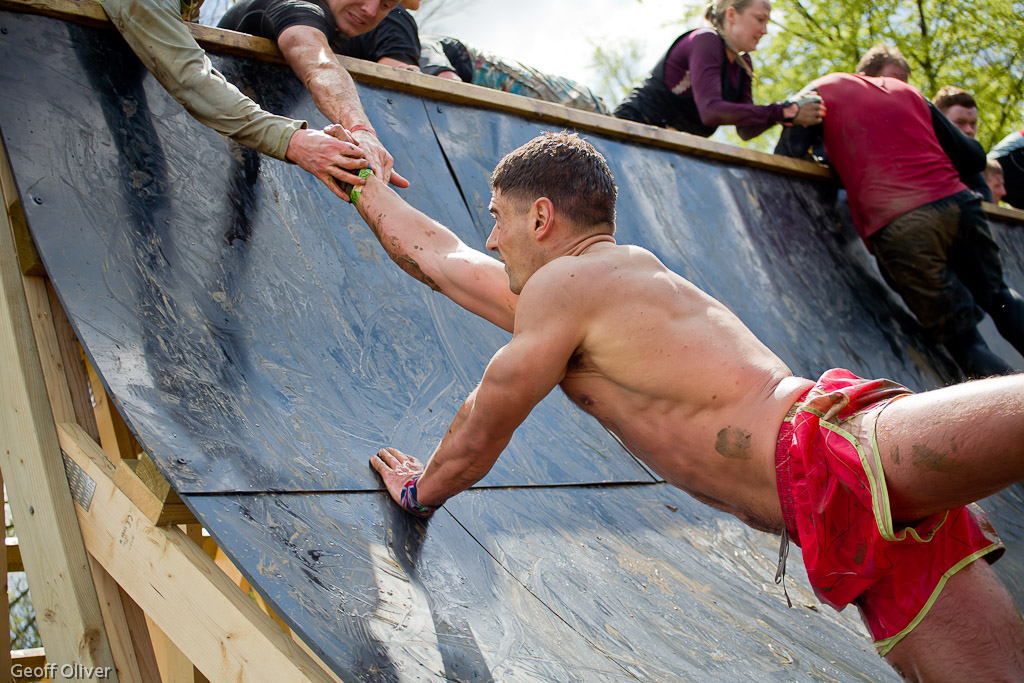
Many of the obstacles are designed with teamwork in mind, none more so than the Everest Wall, the last but one obstacle consisting of a quarter-pipe roughly 12 feet high which proved to be almost impossible to scale single-handed but turned into an object lesson in using team-work and camaraderie to overcome the seemingly insurmountable.

It’s all about working together to reach the top of Everest – Tough Mudder, Boughton House

It is this sense of teamwork that sets Tough Mudder apart from many similar types of event such as Tough Guy.  Tough Mudder is not a race as such, it is a challenge above all else, both a personal challenge and a team challenge.  Add to this mix lots of mud and the fact that most of the entrants were also raising large amounts of money for good causes at the same time and you have the reasons why this has become such a successful format.

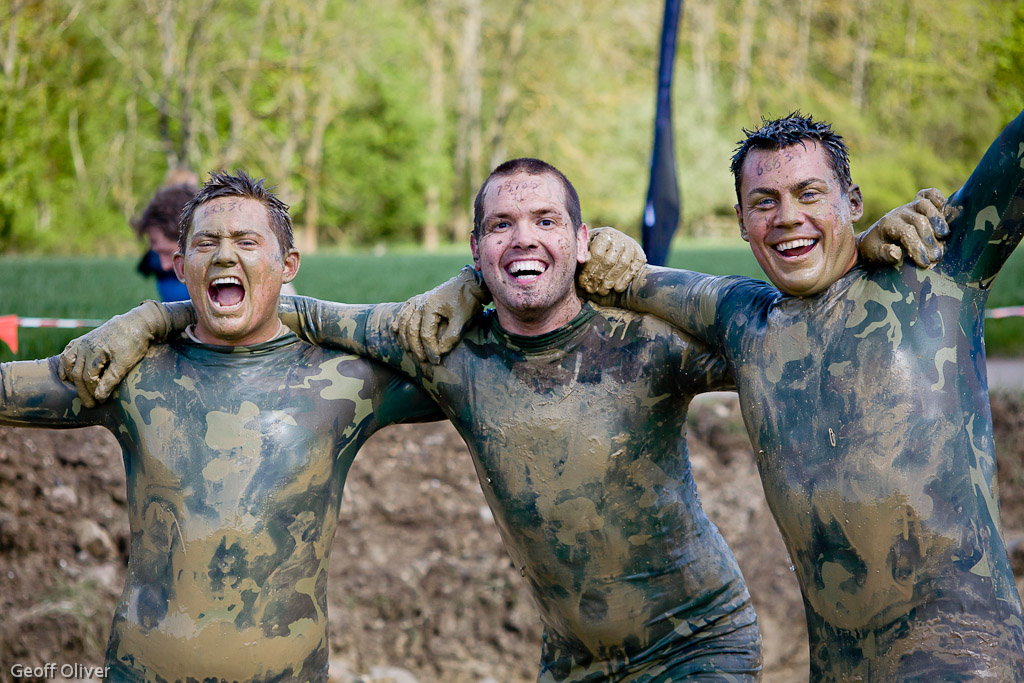
Happy as Mudders in Mud! – Tough Mudder , Boughton House, Northamptonshire UK

As a photographic opportunity, this was a great event for me and just what I needed after a long lay-off suffering from back muscle spasms.  With hindsight, I probably missed some of the very best obstacles in terms of facial expressions, the Arctic Enema and the Spiders Web for instance.  However, this was the first time I had tried to photograph an event like this and I think I did ok for a first attempt.

The Boa Constrictor – Tough Mudder, Boughton House

In truth, I did not know what to expect in terms of spectator access to the obstacles, which was actually much better than I imagined.  Because of this uncertainty, I decided to take my old but trusty Canon EF55-200mm F4-5.6 zoom.  This is a great lens for the money but doesn’t quite give that 3D effect that my regular EF80-200mm F2.8 would have given.  All shots were taken with my EOS 5D (or 5D Classic as it is referred to now).  One equipment decision I was pleased with was footwear.  Janet and I both chose to wear our wellies and we were both very glad that we did!

Walk The Plank – Tough Mudder, Boughton House, Kettering

One thing I wasn’t prepared for was the sheer number of competitors taking part.  8,000 runners took part on the Saturday when we attended, and another 5,000 on the Sunday.  Any attempt to photograph all those taking part was clearly futile.  Even the official event photographers who had cameras located at various locations around the course struggled to get shots of everyone taking part.

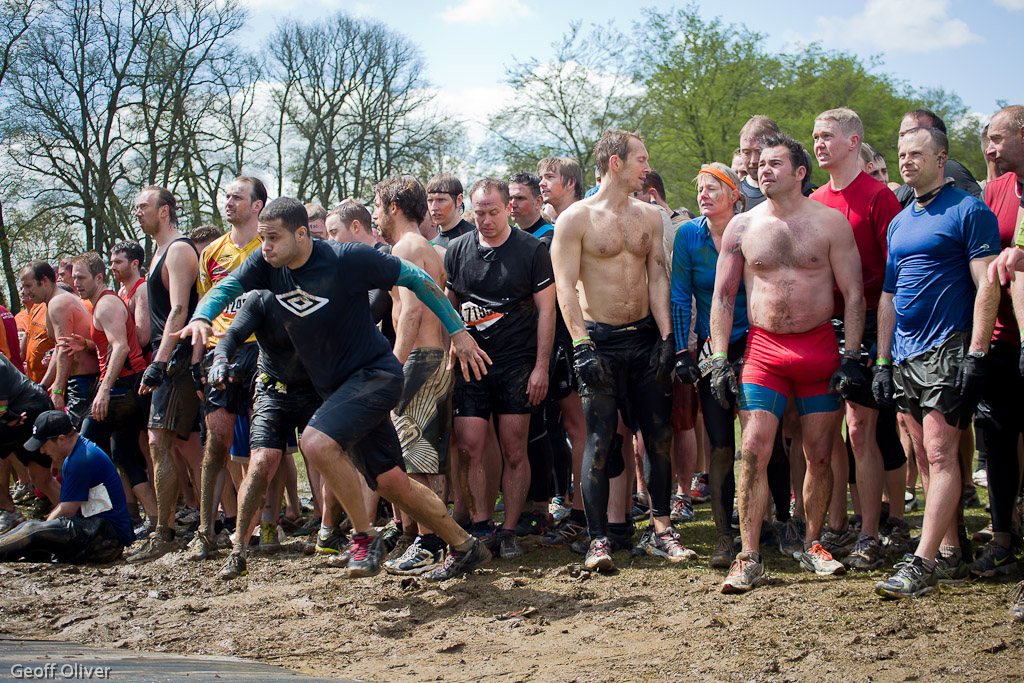
Waiting to tackle the big one – Everest! Tough Mudder, Boughton House, Kettering

Janet and I had a great day out photographing this event.  Not just because it was a beautiful day weather wise but because it was such a great event both to witness and to photograph.  There were times, especially at the “Everest” wall when I had to stop taking photos just to enjoy and appreciate the unbelievable effort that the competitors were making in order to complete the challenge.

A desperate lunge for a pair of grasping hands, Everest, Tough Mudder, Boughton House, Kettering, Northamptonshire, UK

We both left Boughton House full of respect and admiration for everyone who takes part in these events.  The levels of commitment, dedication and teamwork were clear for all to see.  Now that my eyes have been opened to this type of event, I very much hope to be able to cover more of them later in the year, hopefully in Scotland on the 14th and 15th July, and at Cholmondeley Castle in the North West on the 17th and 18th November.

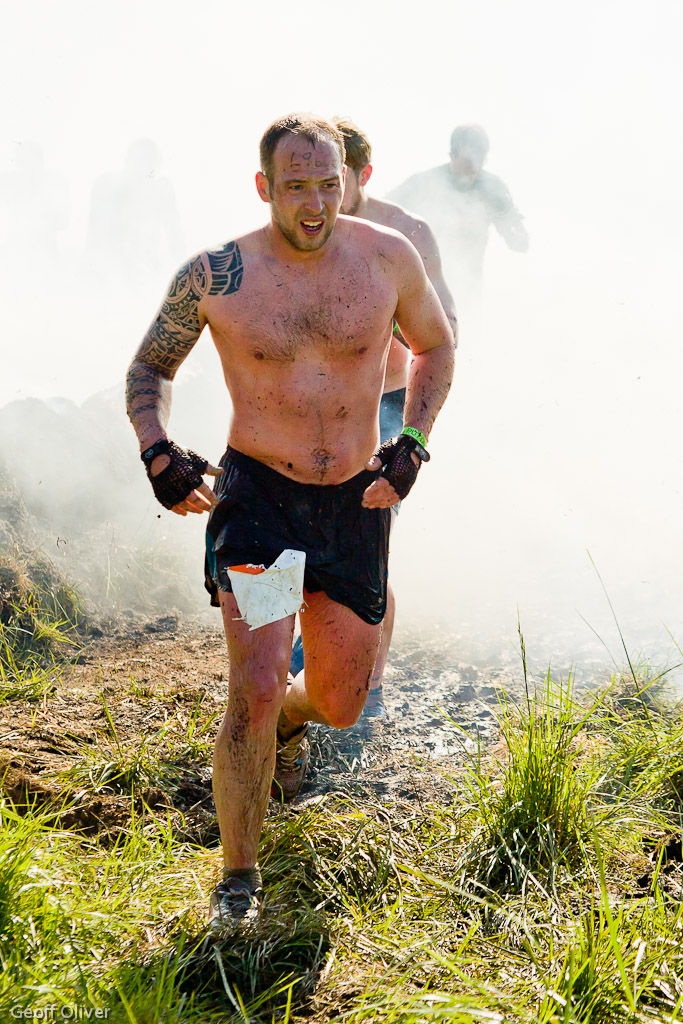
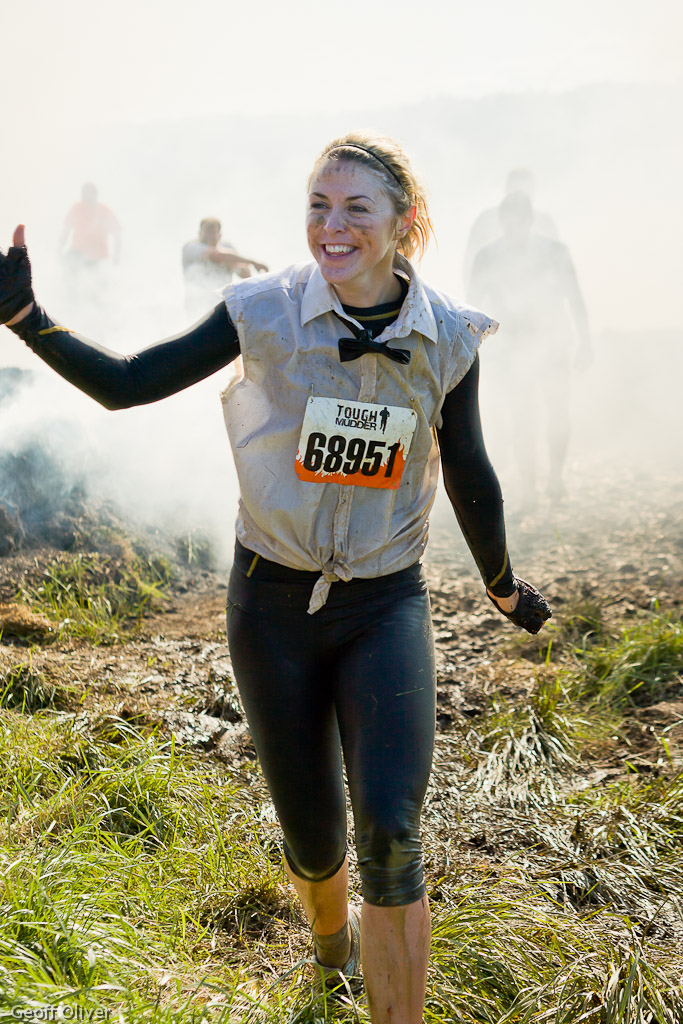
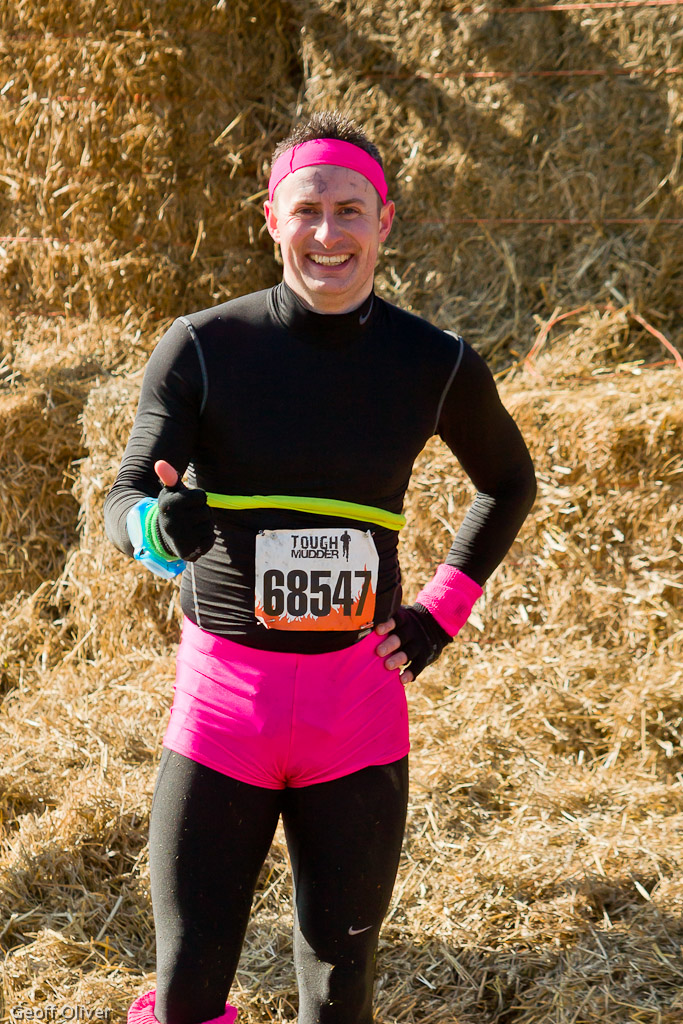
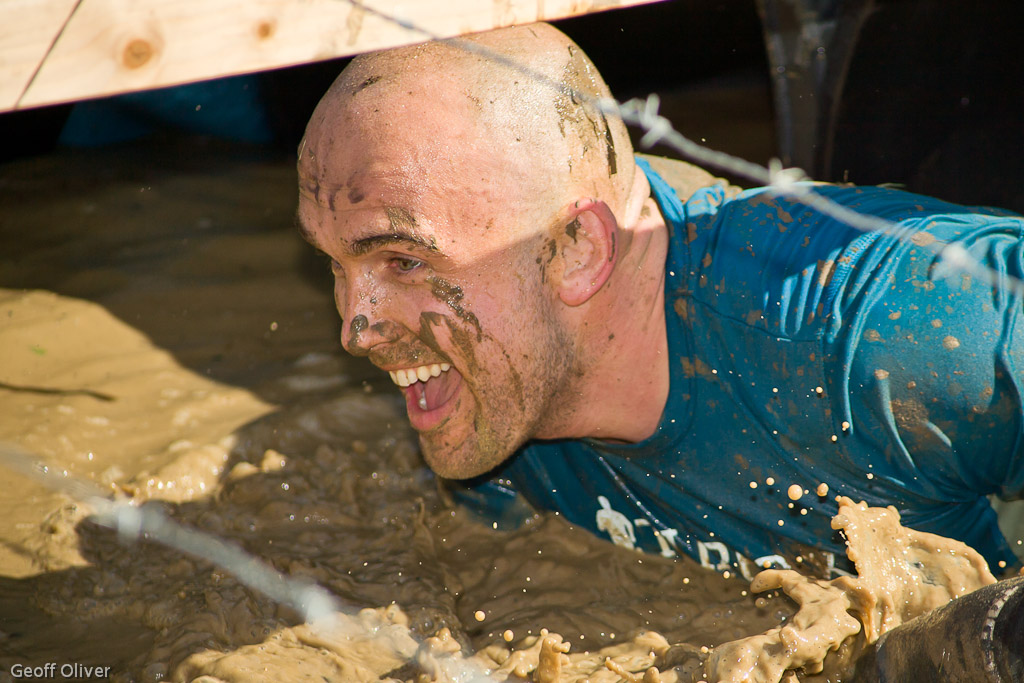
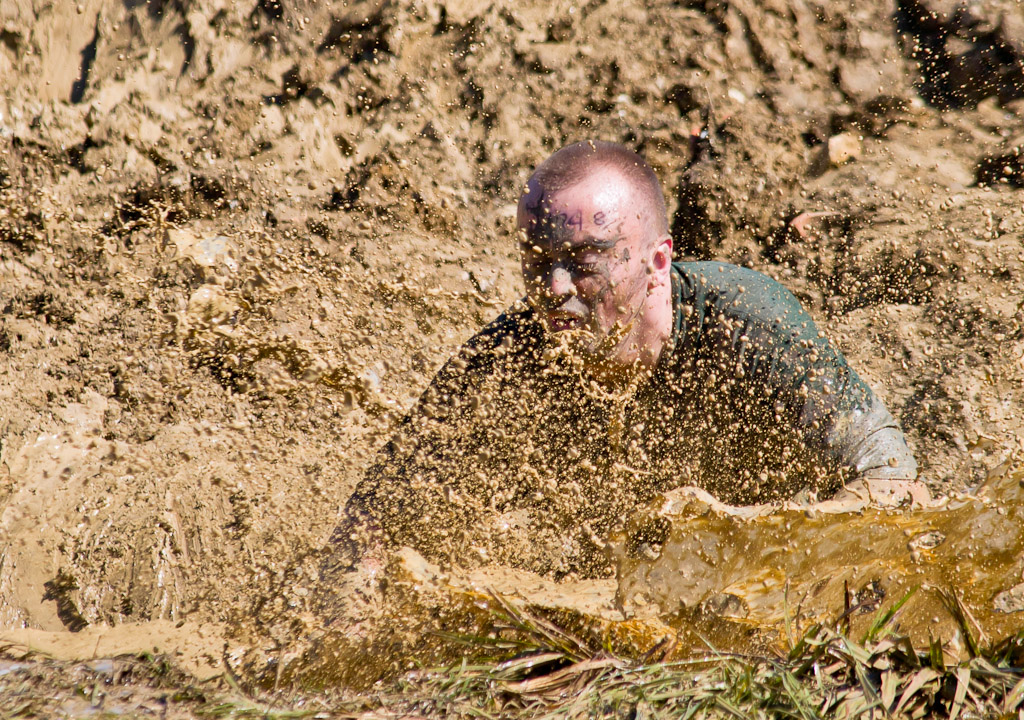
Tough Mudder 73848 in the “Mud Mile”, Boughton House, Northamptonshire, UK – May 2012
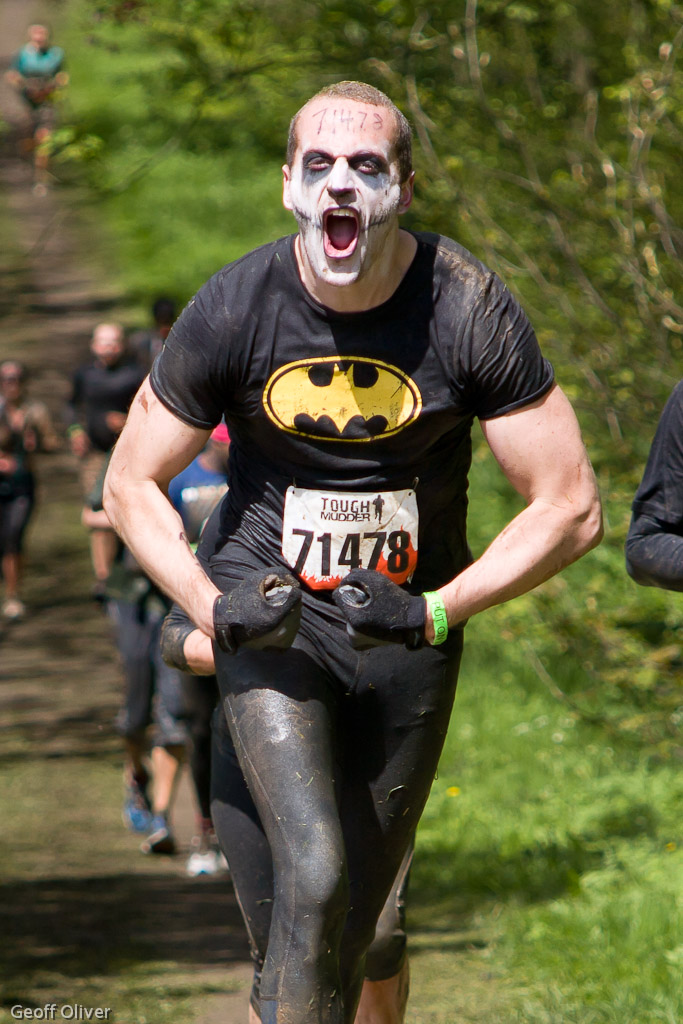
Tough Mudder 71478 demonstrating one way to get noticed, Boughton House, Northamptonshire, UK, May 2012

***Update – December 2019***  for any runners still looking for photos from the South-East/Midlands event at Boughton House, I have now tagged all my photos from the day with your running numbers (wherever they were visible).  Use the search box at the top of the Gallery Page below to check if I managed to tag your number (Saturday 12th May 2012 only):

Here’s the link to the photos I took on the day: 

Tough Mudder UK South-East/Midlands 2012

Geoff
Categories
Journal Places

A Winter’s Morning at Bradgate Park, January 2012

Here’s a few shots from a recent early morning visit to Bradgate Park in Leicestershire.

Looking back from the “Old John” Folly, Bradgate Park, Leicester, January 2012

There’s been some lovely winter sun over the last two weeks.  This is not exactly typical  for January in Northamptonshire which is often grey and rather depressing.  Unfortunately for me, most of the winter sunshine has occurred during the week, when I am at work, and the last two weekends were quite disappointing.

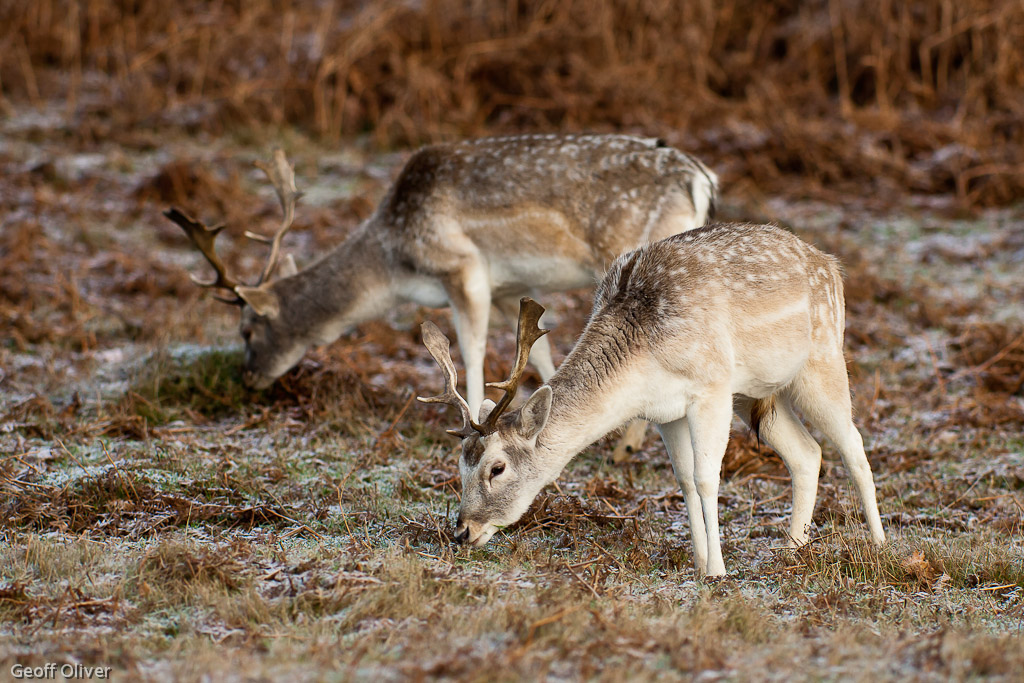
Fallow Deer, Bradgate Park, Leicester, January 2012

Last weekend the forecast was for clear frosty nights and fine sunny days so with this in mind I decided to get up early on Sunday morning and head up to Bradgate Park which is roughly an hour’s drive from my house.

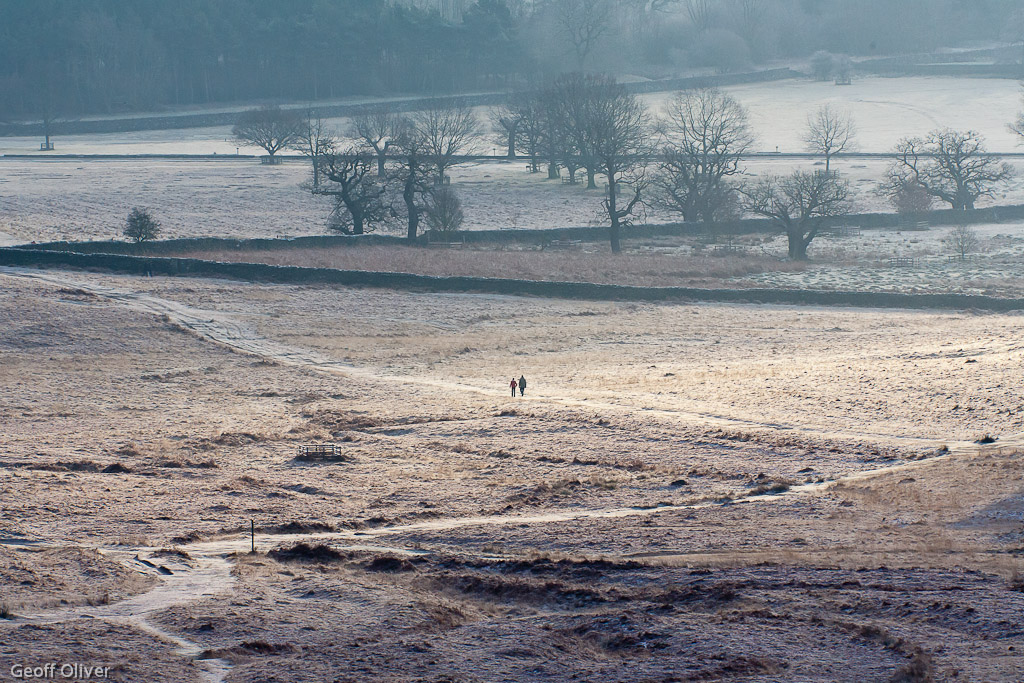
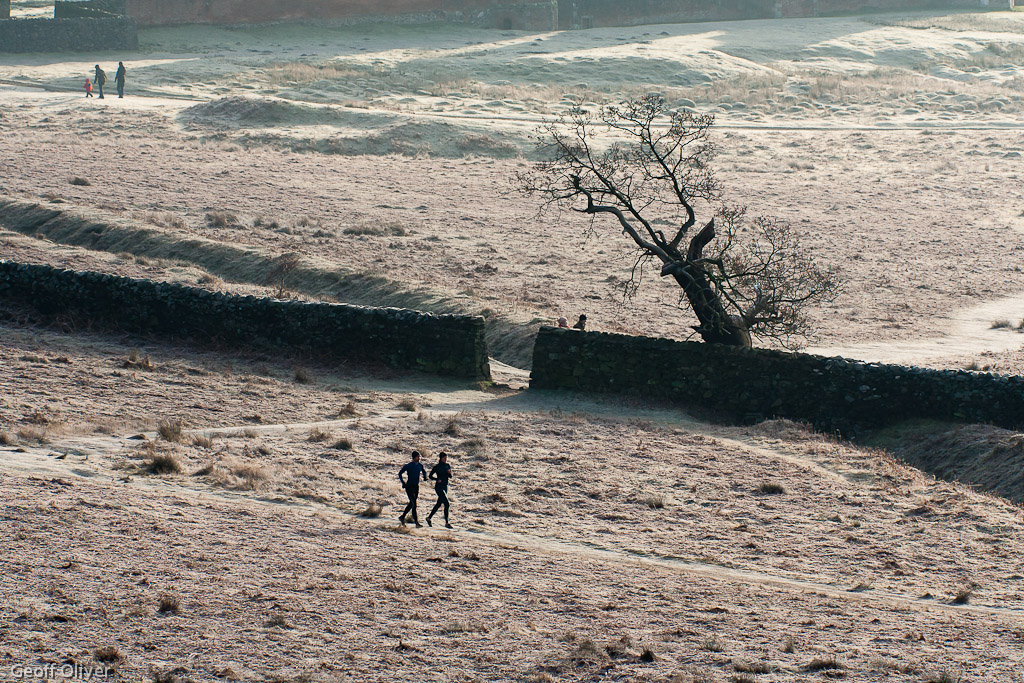
A frosty morning for runners and walkers, Bradgate Park, Leicester, January 2012

It was certainly a cold and frosty morning, but somebody forgot to order the sun and a blanket of grey cloud covered the sky for almost all my visit.  I don’t mind cloudy conditions in general, especially when taking people pictures, in fact cloudy-bright is perhaps my favourite lighting for outdoor portraits.

A rocky outcrop, Bradgate Park, Leicester, January 2012

However, I was disappointed not to see the sun on this occasion as I had purposely made the journey up to Leicestershire specially to take advantage of the winter sun that had been a feature of the preceding week.

Fallow deer grazing near “Old John”, Bradgate Park, Leicester, January 2012

Never mind, here are my photos of the frost, the park and the deer.  I still enjoyed my visit as I always do here.  There’s nothing nicer than setting out up the climb to the Old John folly at Bradgate, camera and monopod in hand, never quite knowing where the deer will be and what opportunities there will be to photograph them.

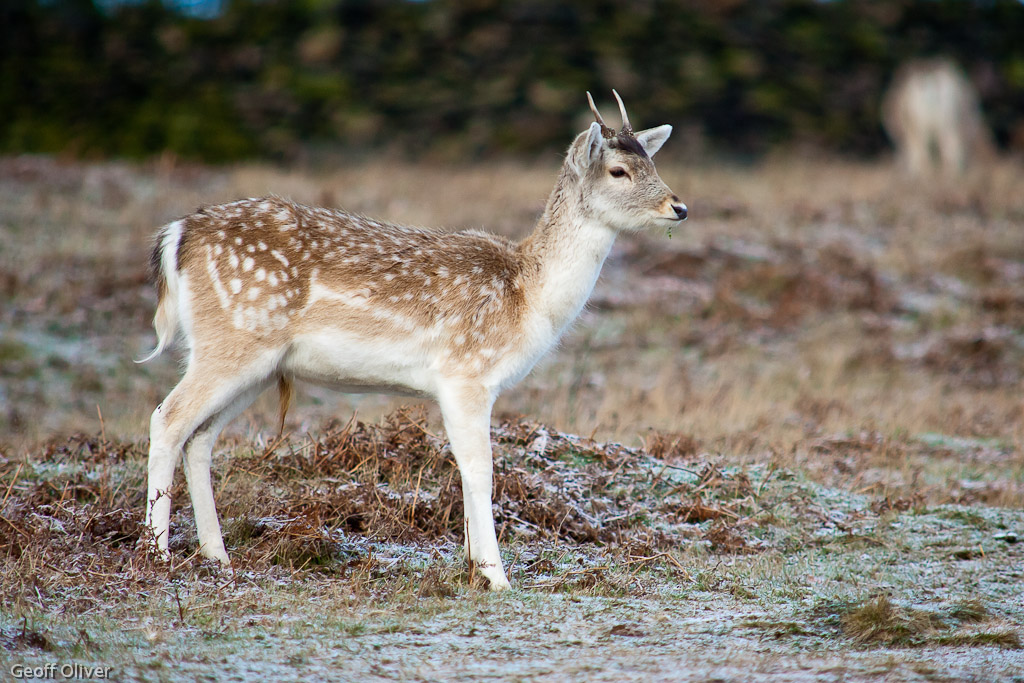
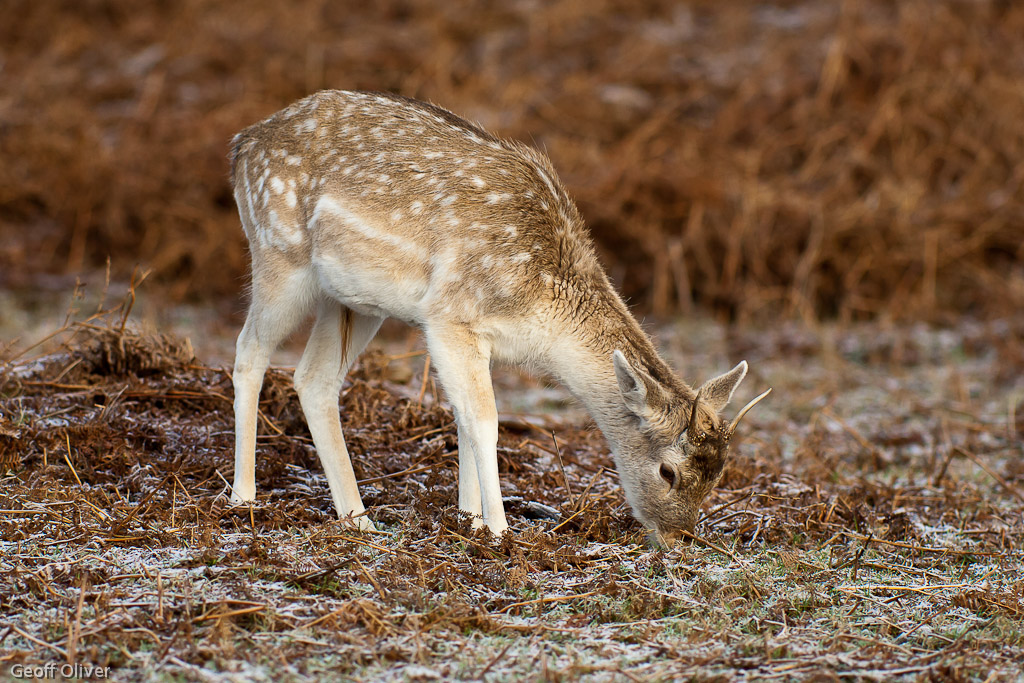
Young male fallow deer, Bradgate Park, Leicester, January 2012

Unlike last time when it was rutting season, I managed to get quite close to the deer this time, and they seemed oblivious to my presence for the most part, which was ideal.  I also looked for other photo opportunities while I was there, including the many runners and walkers who frequent the park, some of which I have included here.

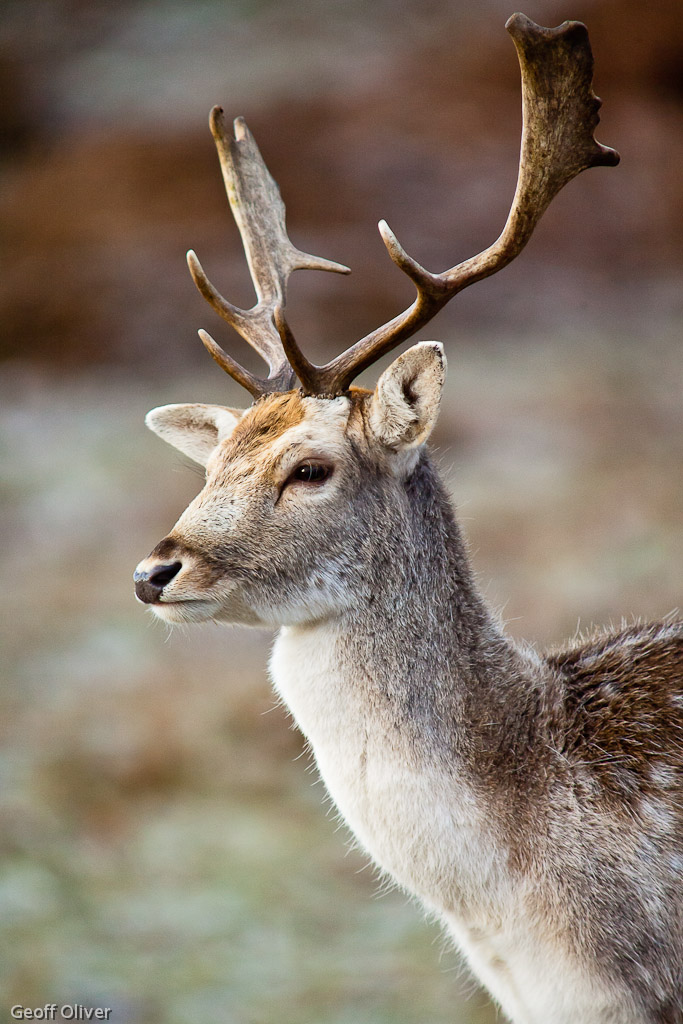
Close-up of fallow deer head and antlers, Bradgate Park, Leicester, January 2012

To see more of my photos from Bradgate Park over the last 12 months, please check out my gallery here.

Geoff

Categories
Journal Places

Grey Seal Pups at Donna Nook, December 2011

As this is my first blog post of 2012, I would like to take this opportunity to wish everyone a very happy and healthy new year.

As some of you will know, I was born in Lincolnshire and the majority of my family still live there, even though I now live in Northamptonshire with my daughter Sophie.  It is always a great pleasure for us to spend Christmas over near Lincoln with my brother and sister-in-law, Alan and Helen.

Young grey seal pup laying on its back

Every year, during the holidays, we try to fit in a visit to one or more of the many attractions in the area although last year was an exception as I managed to catch the flu during my stay which spoiled any plans we had.

Adult female (cow) seal with its young pup

This year I managed to avoid any bugs and we took the opportunity to visit the grey seal colony at Donna Nook, near North Somercotes on the Lincolnshire coast.  This was not the first time we had been to see the seals there, we first went there during the Christmas holidays in 2007.

Young grey seal pup showing off its rear flippers
Over the past few years, Donna Nook has attracted visitors from all over the country to see the grey seals who have chosen this particular stretch of beach to give birth to their pups.  During the peak season, from early November to mid December, up to 1,000 female seals (cows) and their young pups can be seen from the special viewing area.

Young grey seal pup looking alert and showing off its webbed hind feet (flippers)
Adult males (bulls) tend to stay further up the beach, away from the public area, but can still be seen and photographed, albeit with a longer lens.  For this trip, I had my trusty  Canon EF 80-200mm F/2.8L with me, together with my EOS 5D Classic.  This has been a terrific lens for me over the years but perhaps a little short for this subject at times, although the seal pups do venture surprisingly close to the double picket fence that separates them from the viewing public.

Young grey seal pup has found something to play with

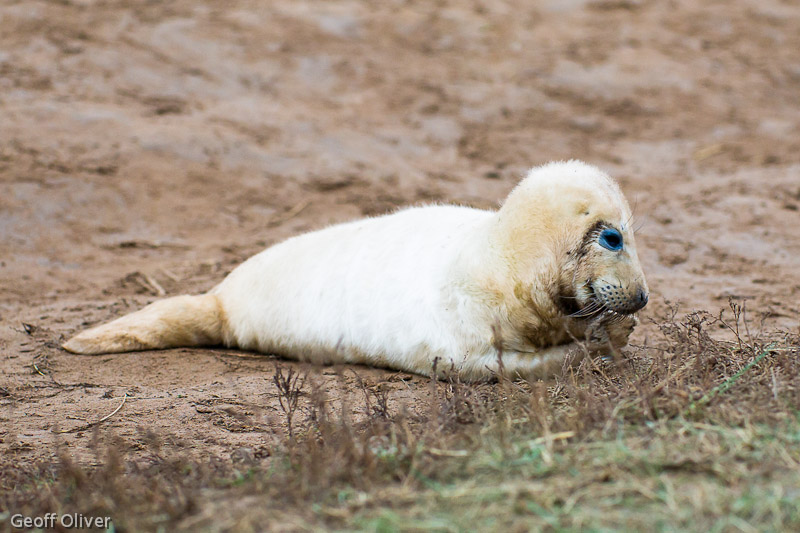
When they are newly born, the seal pups are covered in white fur and appear somewhat “deflated” by a beanie toy with insufficient beans to fill it.  During the next 3 weeks, they feed on their mother’s milk which is 10 times richer than cow’s milk and soon start to put on weight, giving them that oh-so-cute rounded look that we all love.

This seal pup has its white baby fur on one side, and new grey fur on the other

After about three weeks, the mothers will return to the main seal colony further out to sea, to feed and to get their strength back.  The seal pups, meanwhile, will start to lose their white fur which is replaced by the much shorter haired grey speckled coat that you see here.

The foreground pup has lost its baby fur while the younger pup in the background waves to its fans!

By the time the pups are about 6 weeks old, they are strong and confident enough to leave the beach where they were born and at high tide they will swim out to join the others in the main seal colony, which lives for large parts of the year on sand banks further out to sea.
This young seal has lost its baby fur and will soon join the main colony out at sea

I have posted some more photos from our day on my website here.  I shall also be posting some of my photos from 2007 in due course, including the one shown below which I titled “Bashful Seal” and which recently won the “digital image of the year” competition for 2011 at Desborough and Rothwell Photographic Society.

"Bashful Seal"

If you are planning to visit the seals at Donna Nook, remember the best time of year is from early November to mid December.  The best days to visit are during the week if you can, as the public viewing area and adjacent car parks get very busy at weekends during the peak season.

Have a great 2012!

Geoff

Categories
Events Places Re-enactments

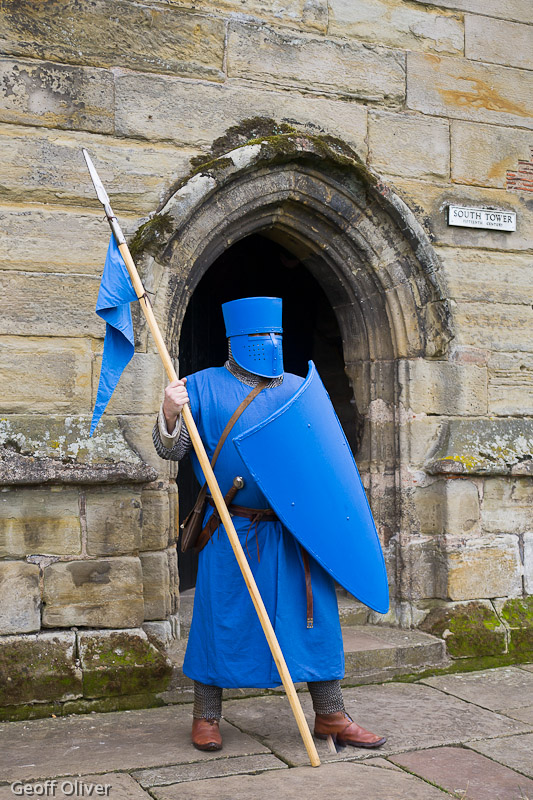
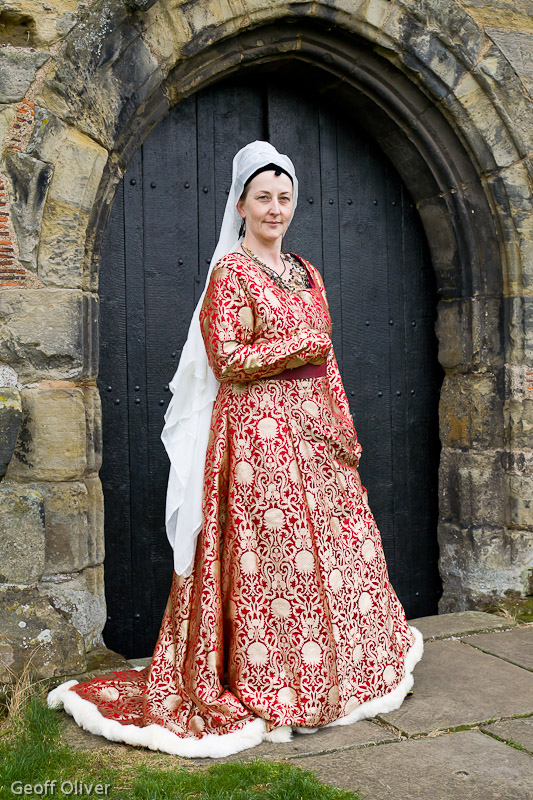
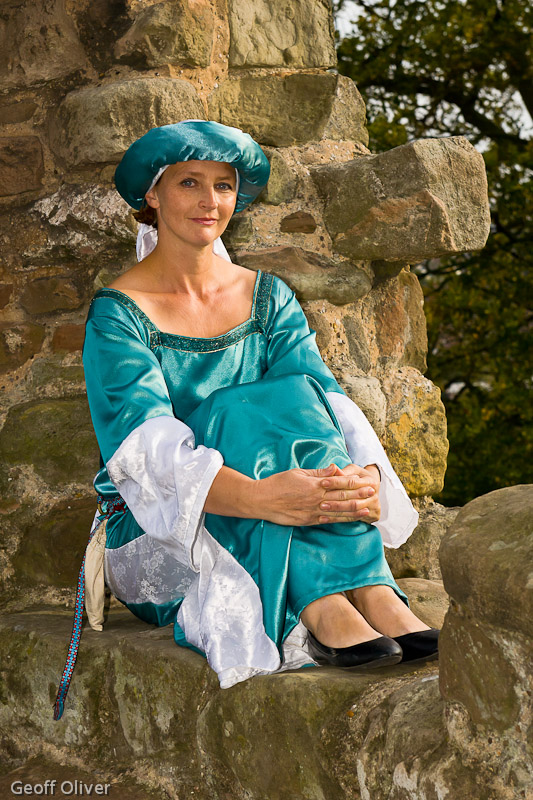
Tutbury Castle Medieval Photographer’s Day 23rd October 2011

Well, I can’t hardly believe how long it has been since I updated this blog.  In fact, my last post was at the end of August following the battle re-enactment at Bosworth.  So, what’s been happening while I have been away I hear you ask?  Well, not a lot really in terms of my photography, hence the extended break.  However, I have attended 5 University open days with my daughter Sophie over this period, all of which I have really enjoyed, but which have taken up quite a lot of my spare time, particularly at weekends.

Alan at Tutbury Castle Medieval Photographer's Day, October 2011

Back in June, my good friend Barry and I were approached by someone whilst visiting the Great Central Railway 1940s weekend asking if we would be interested in attending a special photographer’s event at Tutbury Castle in Staffordshire.  It was short notice but we decided to give it a go and it turned out to be a very interesting day with a number of models dressed in a variety of costumes at this excellent location.

Tutbury Castle Medieval Photographer's Day, October 2011

When I heard that Tutbury Castle were planning a similar event in October, to run from 2pm in the afternoon all the way to 9pm at night, and with a medieval theme, I knew I had to get a ticket.  I was delighted that five other members from Desborough and Rothwell Photographic Society also made it over for the event, along with myself and Barry.

Dawn at Tutbury Castle Medieval Photographer's Day, October 2011

I love doing people pictures as you know but my natural shyness occasionally stops me from approaching people at events and getting the shots I would like.  The opportunity to photograph “models” in historic outfits who were there for the sole purpose of being photographed is surely every photographer’s dream.

Alan at Tutbury Castle Medieval Photographer's Day, October 2011

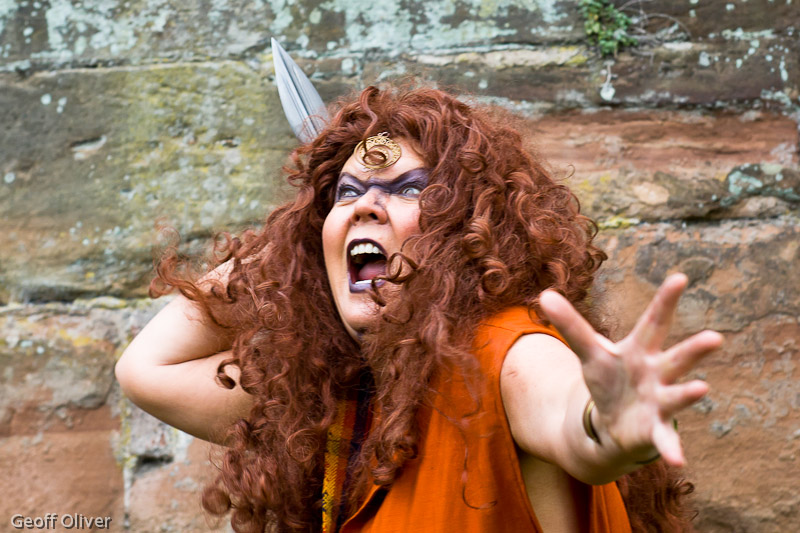
The opportunity of taking photos during the evening, at dusk, and then by floodlight was an added attraction for this event and made it extra special.  I must also congratulate Lesley Smith, the curator at Tutbury Castle, not just for organising the event, but also for being the star attraction, first as Queen Bodicea and later as Nell Guinn.  Lesley certainly throws herself 100%  into the characters she portrays , which also included Queen Elizabeth I back in June.

Lesley as Queen Bodicea at Tutbury Castle Medieval Photographer's Day, October 2011

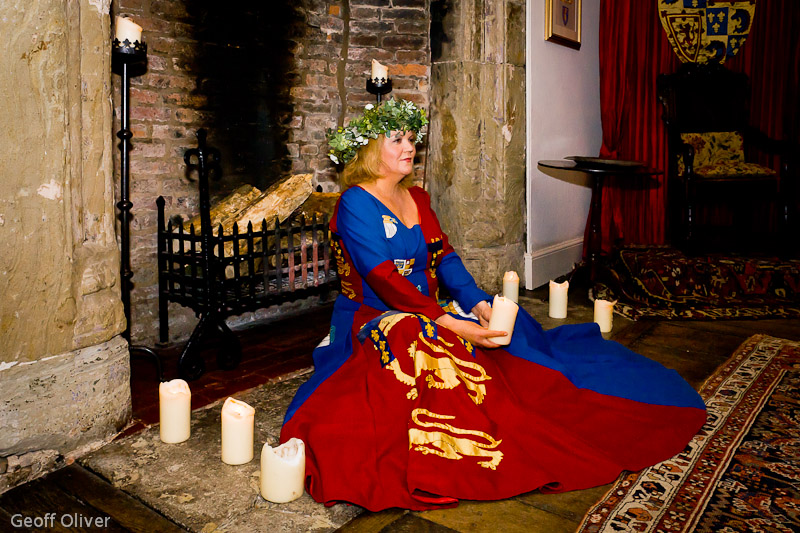
The day ended with a photo shoot in the Great Hall with only candle light for illumination.  This turned out to be a source of some disagreement between the photographers attempting to take the shots, some equipped with tripods and looking to take a long exposure, whilst others without tripods had to use flash to supplement the candle light in order to get a sharp image.

Dusk at Tutbury Castle Medieval Photographer's Day, October 2011

The source of the “conflict” was that the flashes from the tripod-less photographers was affecting the exposures of the tripod users who were shooting long exposures (several seconds I would guess) in order to get their shots by candle light alone.  In the end the flashers, including myself I must confess, were asked to pause while the tripod users took some shots sans flash.

Lesley by candle light (and bounced flash!), the Great Hall, Tutbury Castle, October 2011

As always, the photos here represent only a small portion of the images taken on the day.  I have posted many more over on my website.  I do hope that Tutbury Castle will be planning some more photographer’s days for next year.  From the feedback I have heard, everyone that attended had a brilliant day.

Geoff


Categories
Events Journal Re-enactments

Battle of Bosworth Re-enactment – August 2011

Last weekend was the occasion of the Battle of Bosworth Anniversary Re-enactment.  The Bosworth Battlefield Heritage Centre near Market Bosworth in Leicestershire was the venue for this event.

The King addresses his soldiers before the battle, Bosworth Battlefield 2011

The Battle of Bosworth took place here in 1485 and the battlefield at Bosworth is famous as the place where King Richard III was defeated and lost his life and his crown to Henry Tudor, the first of the Tudor dynasty.

Receiving orders before the battle – Bosworth Battlefield 2011

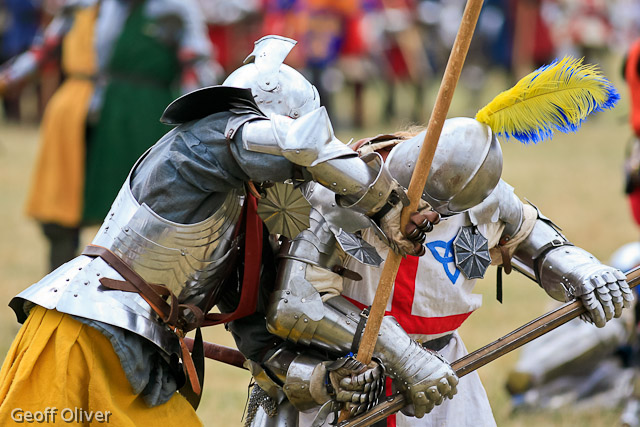
This battle followed the “Wars of the Roses”, a series of battles between two rival dynasties, the white rose of York and the red rose of Lancaster, for the control of the English throne.  Between 1454 and 1471 the houses of Lancaster and York fought thirteen battles with the Yorkist Edward IV winning the eventual victory.

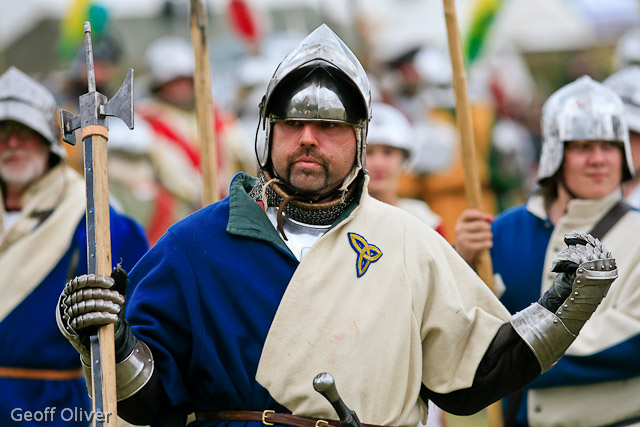
Marching into battle – Bosworth Battlefield 2011

Richard III was Edward’s youngest brother and succeeded him to the throne in 1483.  Just 2 years later, he rode into battle at Bosworth in Leicestershire on the 22nd August 1485 where he met his death and lost his crown to Henry Tudor.

Man to man combat – Bosworth Battlefield 2011

If you are a fan of Shakespeare, you will recall that the bard immortalised King Richard III as he lay defeated on the battlefield with the famous line: “A horse, a horse, my kingdom for a horse.”

No quarter asked for or given – Bosworth Battlefield 2011

I must admit, this was not the easiest assignment I have been on.  The battlefield itself was surrounded by tents and spectators on all sides making backgrounds a problem.  The other problem is that you can only ever be in one place at once so of course you can only photograph what is in front of you.

A pause for refreshment – Bosworth Battlefield 2011

As it happened I was quite well placed for both of the day’s big battles and hopefully managed to capture some of the atmosphere and action of the day.  The living history encampments at either end of the main arena provided further photo opportunities throughout the day.

After the battle – Bosworth Battlefield 2011

I have posted many more photos from the day, including the excellent Jousting Tournament, over on my website

Geoff

Categories
Journal Places

Lulworth Cove to Durdle Door – A Walk Along The Jurassic Coast

I thought I would share some more photos taken on my recent holiday in Dorset.  This time I will be taking you up and over the coastal path from Lulworth Cove to Durdle Door.

Lulworth Cove - A wide-angle view of the bay

Lulworth Cove is a natural phenomenon formed over hundreds of thousands of years.  The cove, which is almost circular in shape, was formed because softer clays just behind the shoreline eroded faster than the Portland Limestone that forms the cliffs at the entrance to the bay.  The faster erosion of this soft clay, with harder chalk cliffs behind it, is responsible for the impressive shape of the cove – one of the finest examples of such a feature in the world.

Lulworth Cove - Close-up of the beach

The two photos above were taken from roughly the same place up on the grassy slopes overlooking the bay.  The wide-angle shot shows the view at the wide end of my 17-35mm zoom.  Even at 17mm on my full-frame Canon 5D, I was struggling to get in all of the cove.  Using such a wide-angle lens also distorts the view somewhat as I was considerably closer to the bay than appears from this shot.  By comparison, the close-up shot of the beach was taken at the long end of my 55-200mm zoom.

"Lulworth Cove is a magnet for geology students from all over the world"

Lulworth Cove is a magnet for geology students from all over the world.  The photo above taken in the nearby “Stair Hole” shows an example of limestone folding caused by movements in the Earth’s crust millions of years ago.  It also gives an idea of what Lulworth Cove itself would have looked like in its infancy thousands of years ago.

Looking back towards Lulworth Cove from the coastal path

In 2001, this stretch of coastline was granted World Heritage status by UNESCO.  The coastal path heading West towards Durdle Door climbs steeply from the visitor centre and car park at Lulworth.  My daughter Sophie and I took several breaks as we headed up the chalky path.  My excuse was that I wanted to stop to take in the views, nothing at all to do with being out of breath!

Looking West towards Durdle Door and the Jurassic Coast

The rewards for our efforts were spectacular views along the Jurassic Coast.  As we finally made it to the summit and the path levelled out we caught our first sight of Durdle Door, not the arch at this stage but the huge hunk of Portland Limestone from which it is formed.

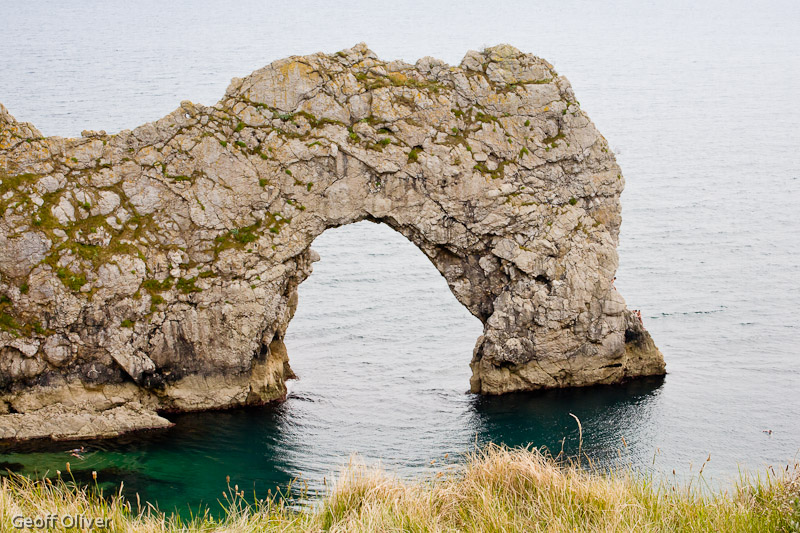
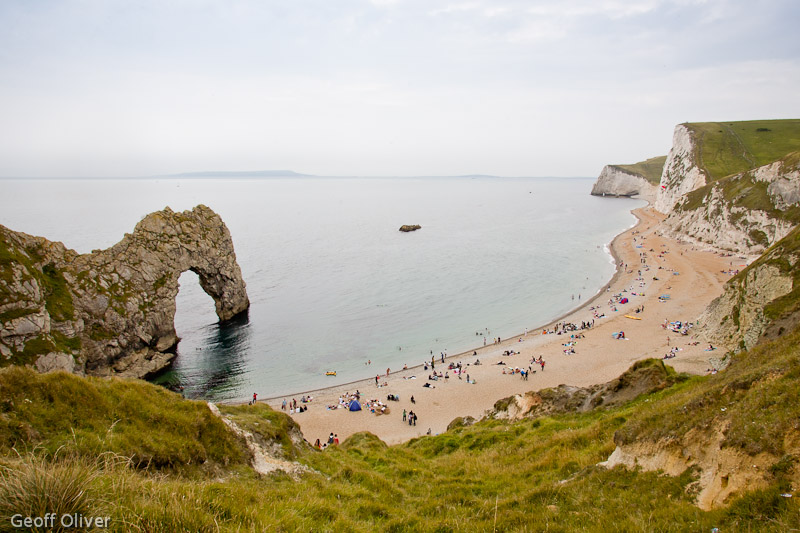
The limestone arch at Durdle Door

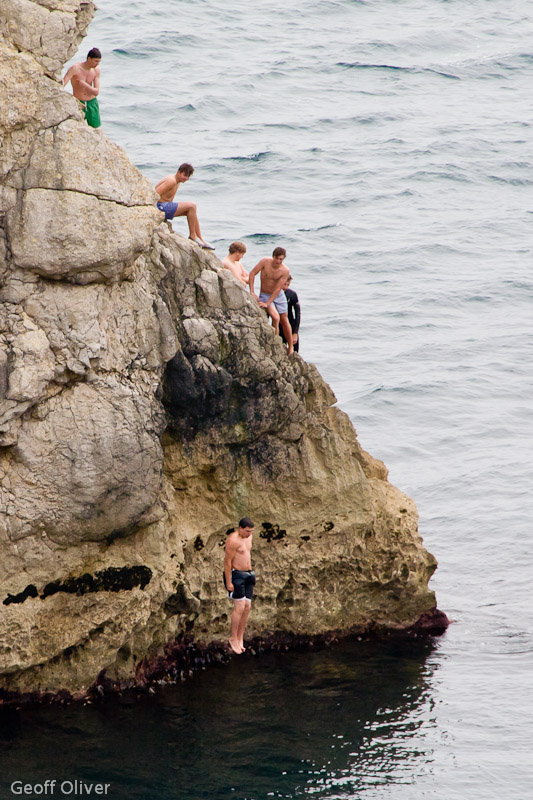
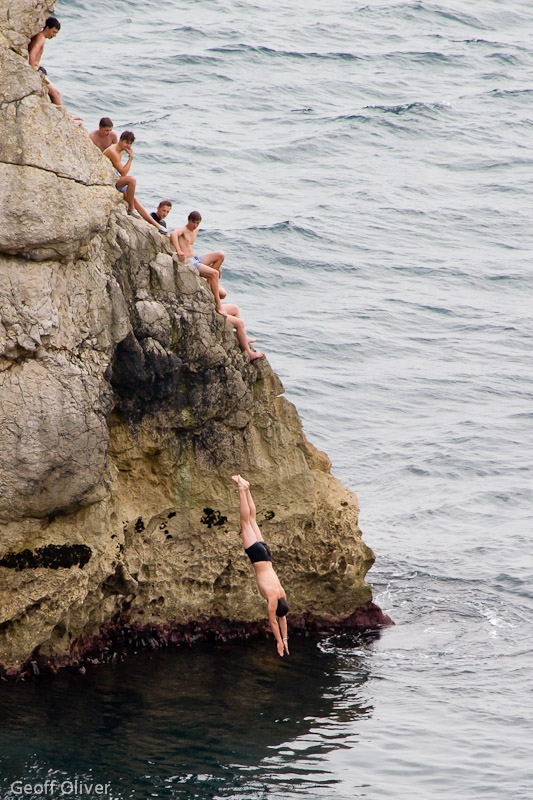
Finally, after a quick stop for an ice-cream, we arrived at Durdle Door.  The limestone arch was every bit as spectacular as I had expected it to be.  It’s not easy to convey the scale of it in photographs as the cliff-top location from which I took the shot above is itself massively tall.  However,  a closer look at the foot of the arch reveals a number of young men and teenage boys perched somewhat precariously on the rock waiting their turn to either jump or dive into the water below…

"Tombstoning" feet first at Durdle Door

The act of jumping into the sea from various heights has recently become known as tombstoning.  The practice has been in the headlines recently due to a number of incidents where there was insufficient depth of water to jump or dive into, sometimes leading to serious injury to those taking part.  Diving head-first from a pier would appear to be especially dangerous and should never be attempted under any circumstances.

Diving from the rock at Durdle Door

There appeared to be no such problem with depth of water here, at least not at the time of our visit.  Divers and jumpers alike were encouraged by their freinds and families while entertaining casual onlookers from the beach and cliff top directly opposite.

Durdle Door - View of the beach and the arch looking West

After a very enjoyable time watching the antics on the rock and enjoying the views out to sea, it was time to head back along the path to Lulworth.  I stopped one more time to take in the view looking back along the beach with the arch pointing along the coast towards Weymouth in the far distance.

Looking East from Durdle Door towards Lulworth

We certainly enjoyed our day exploring Lulworth Cove and Durdle Door.  The path from Lulworth was quite tough and steep for inexperienced walkers like us but it was well worth the effort in the end, and the return journey was somewhat easier, starting as we did from the top of the cliffs at Durdle Door.  Our original plan was to go down to the beach for a better view of the arch but in the end we decided to leave that for another day…

More photos from our walk can be found on my website here

Geoff

P.S.  Safety advice for anybody considering “Tombstoning” is available at the Royal Society for the Prevention of Accidents (RoSPA) website here